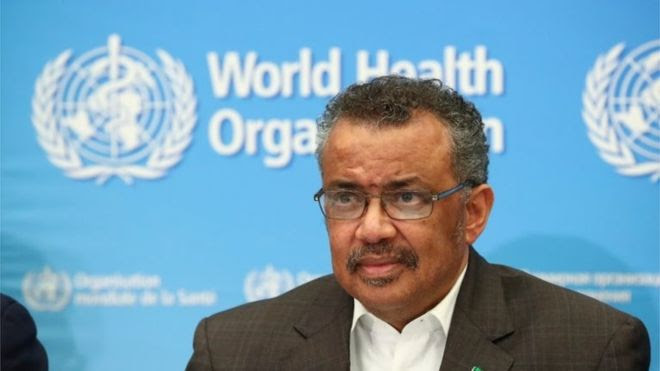
The World Health Organization (WHO) declared the coronavirus outbreak originating in China a "public health emergency of international concern" on Thursday.
Following an assessment meeting of the Emergency Committee, WHO Director-General Tedros Adhanom said the reason for the declaration "is not because of what is happening in China, but because of what is happening in other countries."
"Our biggest concern is the possibility that the virus will spread to countries with weaker health systems that are not prepared to deal with it," Adhanom said in Geneva, Switzerland.
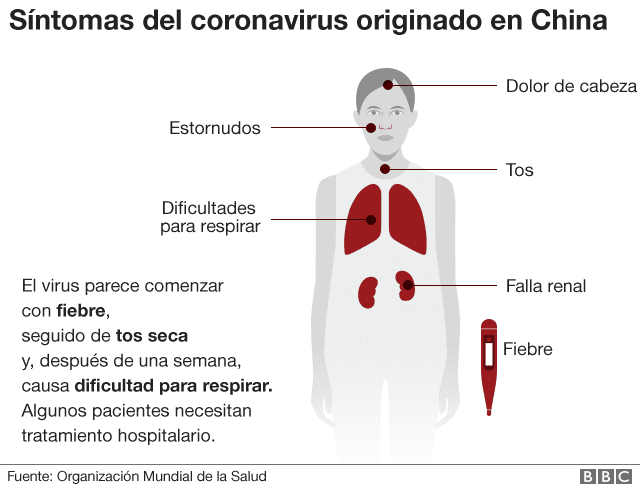
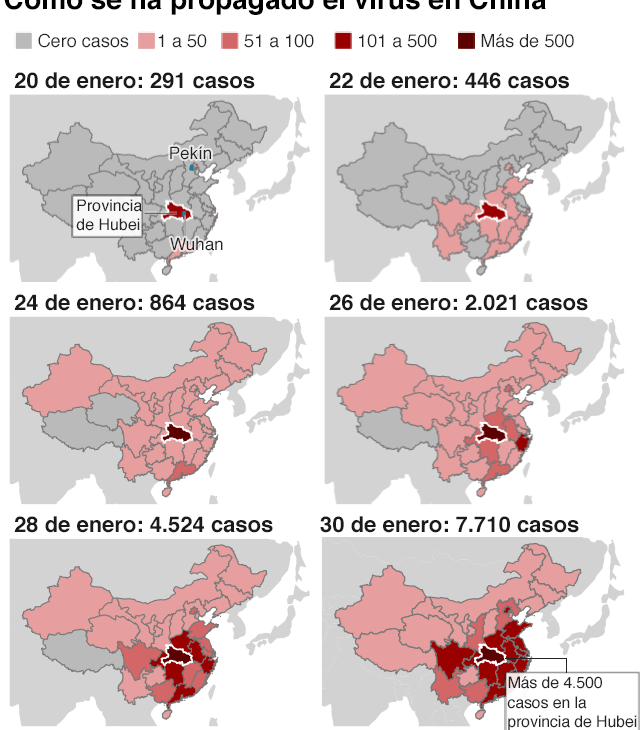
At least 170 people have died in China from what is also known as Wuhan pneumonia. In addition, nearly 8,000 cases have been confirmed in the Asian country, representing 99% of diagnoses.
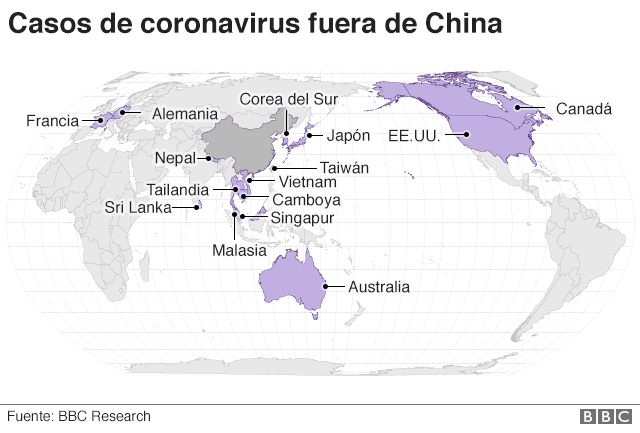
Meanwhile, the WHO has recorded 98 cases in 18 other countries as of Thursday.
After having ruled out declaring a global alert a week ago, WHO experts meeting in Geneva changed their minds after the confirmation of eight human-to-human transmissions in Germany, Japan, the United States and Vietnam.
These were patients who had not recently traveled to China, whereas, of those affected, "the vast majority have had a history of travel to Wuhan or have been in contact with someone who has a history of travel to Wuhan," Adhanom explained.
He described the virus as an "unprecedented outbreak" that has been met with an "unprecedented response," and praised the "extraordinary measures" that Chinese authorities took to prevent it from spreading.
"Let me be clear, this statement is not a vote of no confidence in China."
What happens now?
The WHO declares a Public Health Emergency of International Concern (PHEIC) when there is "an extraordinary event that is determined to constitute a public health risk to other States through the international spread of disease."
This is the sixth time the WHO has declared this type of emergency. The others occurred during the H1N1 influenza outbreak (2009), the Ebola outbreaks in West Africa (2014) and in the Democratic Republic of Congo (2019), the polio outbreak in 2014, and the Zika virus outbreak in 2016.
Following its declaration, the WHO issues temporary recommendations that the organization 's 192 member countries must follow to contain the spread of a disease, in this case the Wuhan coronavirus.
It also allows for organizing actions to support less developed countries with health systems lacking the resources to stop the spread.
The alert also seeks to "combat rumors and misinformation," Adhanom said, adding that "this is a time for solidarity, not stigma" towards China.
"More important than declaring a public health emergency are the Committee's recommendations to prevent the spread of the coronavirus and ensure a measured and evidence-based response ," the WHO director said on Thursday.
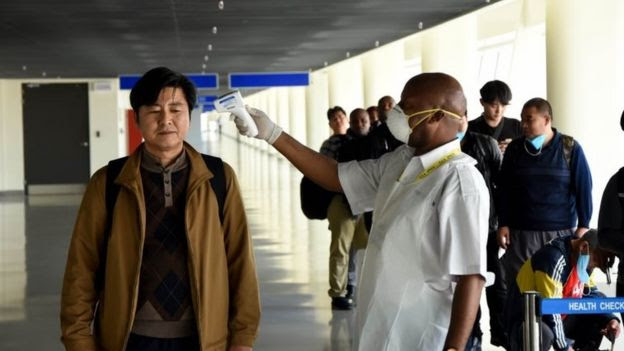
"There is no reason to take measures that unnecessarily interfere with international travel and trade. We call on all countries to implement evidence-based and consistent decisions," he added.
Prevention measures in several countries have increased significantly in recent days after it was confirmed that there are cases of infection in all provinces of China.
This Thursday, Italy banned the disembarkation of a cruise ship with 7,000 people on board after a Chinese woman presented symptoms that raised suspicions that she might have the Wuhan coronavirus.
Russia, Mongolia, and North Korea partially closed their borders with China, while Australia announced it will send people quarantined for possible coronavirus infection to Christmas Island, 2,000 km from its mainland.
Other countries, including France, Italy, the UK, the US, Malaysia, Japan, and the Philippines, have launched operations to evacuate their citizens from Wuhan.