
Venezuela está en el grupo de países con bajo riesgo de transmisión del coronavirus en América. Sin embargo, las autoridades venezolanas deben prepararse ante la posibilidad de que la infección llegue al país.
Los determinantes biológicos de la transmisión de un posible caso obedecen a tres causas fundamentales:
- Número de casos en otros contextos. Cada vez que aumenta el número de casos en China y otros países, aumenta la probabilidad de que ocurran en Venezuela.
- Movilidad migratoria. Los contingentes de personas que se movilizan desde la zona afectada primariamente hasta la zona no afectada (el número de pasajeros promedio entre dos o más puntos) es una variable importante. Por supuesto, si se afecta de forma drástica la movilidad (cierre de fronteras, puertos, aeropuertos), la probabilidad de exportación baja considerablemente. La pregunta más importante es por cuánto tiempo estas medidas de cuarentena o distanciamiento social pueden mantenerse sin un impacto social masivo. Paradójicamente, la capacidad del control social efectivo en regímenes fuertes puede significar mejor capacidad de evitar la diseminación y, quizá como ejemplo contrastante, sería útil tratar de imaginarse una cuarentena de estas características en Nueva York, Pennsylvania, New Jersey, Vermont, Rhode Island, Maine, New Hampshire, Connecticut y Massachusetts (con un total de 55 millones de personas).
- Un repositorio web Epirisk, que es una plataforma computacional diseñada para estimar rápidamente la probabilidad de movilizar individuos infectados desde sitios afectados por un brote de enfermedad a otras áreas del mundo, por vía aérea y medios diarios de transporte. También permite al usuario explorar los efectos de las posibles restricciones aplicadas al tráfico de las líneas aéreas y los flujos de transporte.
Si se duplican los casos cada 48 horas, se puede estimar que para el sábado primero de febrero de 2020 habrá 18.000 casos en China. Si se asume que no se implementan restricciones de viajes, se pueden estimar riesgos relativos y comparativos entre los diferentes países. Hasta ahora, esta probabilidad se ha cumplido de forma muy acertada.
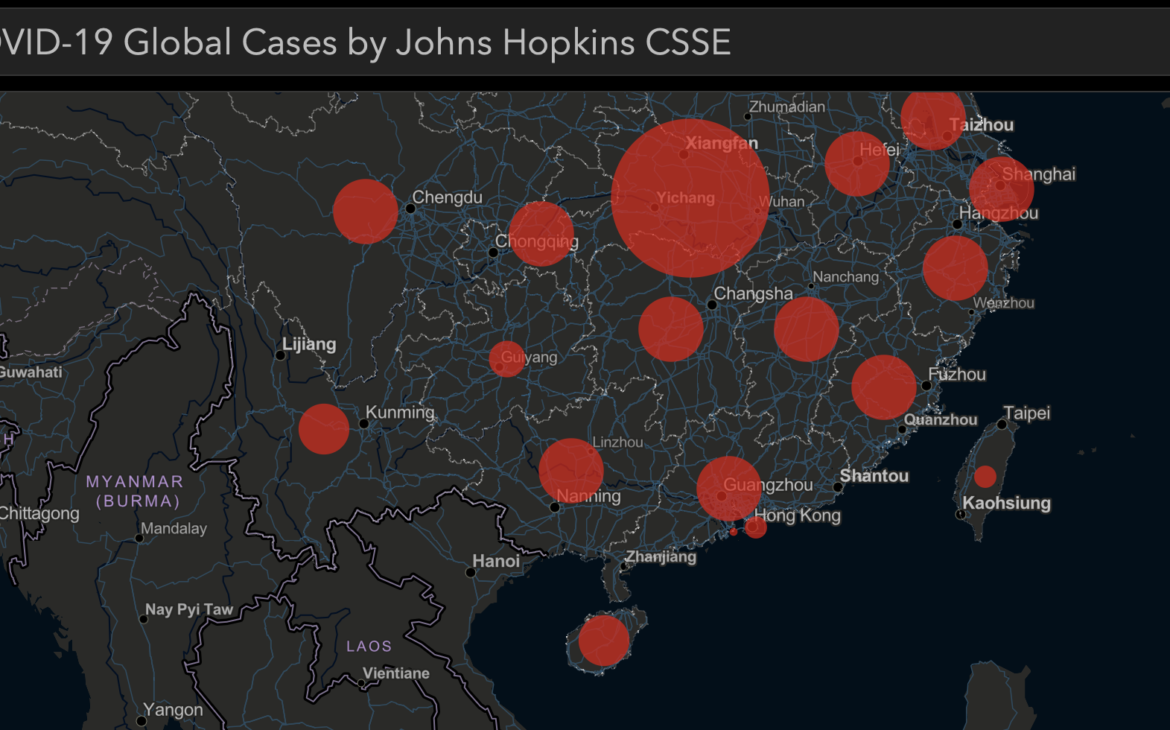
A continuación las estadísticas del Coronavirus COVID-19 en tiempo real según Johns Hopkins.