
By Clarinha Glock
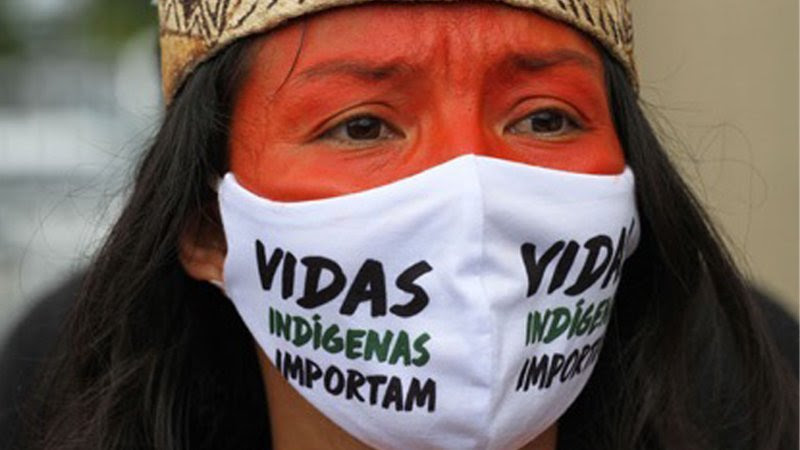
Currently, COVID-19 is the main threat of genocide against Indigenous populations since the colonial era . Given the growing number of deaths and infections, the Pan American Health Organization (PAHO) recently called for prevention and treatment of the virus among Indigenous peoples during the pandemic to respect their unique characteristics, including traditional medicine. PAHO also urged that, in addition to international measures adopted to interrupt the transmission of SARS-CoV-2, interculturality be considered as a measure to contain this pandemic when dealing with Indigenous populations. [ 1 ]
The most recent PAHO data on COVID-19 in Indigenous peoples of the Americas indicate that between January 1 and October 15, 2020, 154,335 cases and 3,405 deaths were confirmed. [ 2 ]
According to the Pan American Health Organization (PAHO), Brazil has the most confirmed cases in Latin America, followed by Colombia and Peru, but surpassed by Mexico and Colombia in the number of Indigenous deaths. Statistics may vary depending on the source. For example, in Brazil, the number of infections and deaths differs because federal agencies do not include Indigenous people in urban areas.
As of October 22, the Rede da Articulação dos Povos Indígenas do Brasil, which keeps a daily count, reported 37,540 indigenous people with confirmed COVID-19, with 859 deaths and 158 affected communities. [ 3 ]
Since the beginning of the pandemic, PAHO has urged special attention to be paid to these populations, stressing that any preventive measures must be done in collaboration with the leaders of each group or community to overcome the obstacles of linguistic and cultural adaptation, stigmatization and economic difficulties.
In the epidemiological bulletin of July 15, 2020, during the surge in cases, the organization again stressed that to achieve the goal, isolation and quarantine measures must take into account the lifestyle of these populations and their distribution: urban areas, village residents, migrants or those in voluntary isolation, emphasizing that vulnerability and exposure to the novel coronavirus are not the same in all communities.
Dr. Paulo Cesar Basta, a Brazilian epidemiologist and researcher at the Oswaldo Cruz Foundation, explained that the fact that Indigenous people live in communities where they share houses with one or more families (also called extended families) poses an obstacle in the fight against COVID-19 . The villages are located in places where there is generally no electricity or potable water, making it impossible to maintain the social distancing necessary to prevent the epidemic from spreading or to stop the storage of food obtained through hunting, fishing, and farming. If an Indigenous person becomes ill and stops these activities, they cannot feed their family.
SARS-CoV-2 arrived in indigenous areas during a period of uncontrolled deforestation, the advance of artisanal mining, high-impact projects such as hydroelectric plants, and the use of agrochemicals associated with deficiencies in health care, intolerance, and the risk of losing lands and hard-won rights in many Latin American countries.
In this context, in addition to COVID-19, healthcare professionals must be prepared to treat obesity, hypertension, anemia, diabetes, hepatitis, and HIV, among other diseases (respiratory, chronic, infectious, and parasitic) related to the shift from natural diets to processed foods, lack of sanitation, water and fish pollution, and violence against those who resist the encroachment on their territories. All these factors, acting together, compromise immune status. The Amazon region, home to numerous Indigenous populations, is also an endemic area for malaria .
Dr. Basta explained that "the high rates of infant mortality, diarrhea, and malnutrition among Indigenous people predate this situation, and these are preventable diseases. Artisanal mining is a machine of atrocities that leaves a trail of destruction." This reality is repeated in Brazil, Venezuela, and other neighboring countries that make up the Amazon basin.
According to the epidemiologist, 90% of the mercury used to amalgamate gold ends up in rivers, contaminating the water and fish, which are the main food source for these communities. Mercury ingested by a person enters the bloodstream and causes disorders in the central nervous system, kidneys, and heart.
The underreporting of diseases, including COVID-19, and the 50 years of experience working with indigenous peoples of Xingu (Mato Grosso), Zo'é (Pará) and Xinane (Acre) lead the Brazilian public health specialist, Douglas Rodrigues, researcher of the Health and Environment Unit-Xingu Project of the Department of Preventive Medicine of the Paulista School of Medicine, to request that the demands of indigenous people in relation to health be adequately addressed.
"We must recognize that we are entering a society that has its own knowledge of care and healing, with etiological explanations for the origin of diseases, and set aside our ethnocentric view to create connections and understand that indigenous people have traditional systems of healing and care that have proven effective against SARS-CoV-2 in several communities," he pointed out.
“Isolation is a survival strategy for these groups. Furthermore, healthcare professionals and representatives must take precautions to avoid becoming vectors of SARS-CoV-2 transmission,” concluded Dr. Rodrigues.