
By Naomi Grimley, BBC News
The COVID-19 pandemic "will last a year longer than it should" because the poorest countries are not receiving the vaccines they need, the World Health Organization (WHO) warned.
Dr. Bruce Aylward, one of the leaders of the WHO, said that, in that context, the crisis caused by the spread of SARS-CoV-2 could "easily extend into 2022."
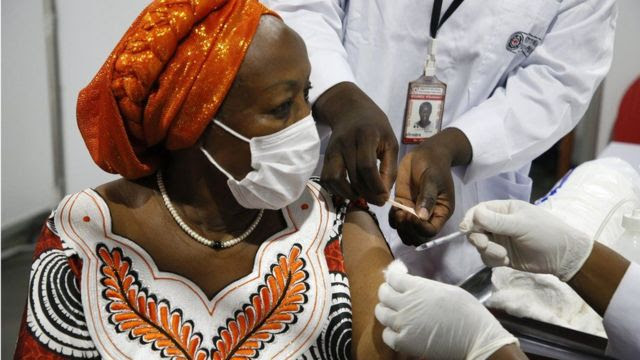
Less than 5% of Africa's population has been vaccinated with both doses, compared to 40% in most other continents.
The original idea behind Covax, the United Nations-backed global program to distribute vaccines fairly, was that all countries could acquire vaccines through that mechanism, including participating wealthy countries.
But most G7 countries decided to hold back after they began making bilateral deals directly with pharmaceutical companies to secure their own vaccines.
Priority
A group of charities, including Oxfam and UNAIDS, criticized Canada and the UK for acquiring vaccines for their own populations through Covax.
Official figures show that earlier this year, the UK received 539,370 doses of Pfizer, while Canada took just under one million doses of AstraZeneca.
Aylward called on rich countries to give up their places in the queue to acquire vaccines so that pharmaceutical companies can prioritize lower-income countries .
He noted that rich countries need to "take stock" of where they stand with respect to the donation commitments they made at summits such as the G7 meeting in the summer.
"I can tell you we're not on the right track," he said. "We really need to speed things up (the vaccine rollout), or you know what? This pandemic will last a year longer than it needs to."
The United Kingdom has delivered more than 10 million vaccines to countries in need and has pledged to provide a total of 100 million.
The People's Vaccine alliance of charities has published new figures suggesting that only one in seven of the doses promised by pharmaceutical companies and wealthy countries are reaching their destinations in the poorest countries.
"Morally indefensible"
Oxfam's global health advisor, Rohit Malpani, acknowledged that Canada and the UK technically had the right to receive vaccines through this route, as they had made payments to the Covax mechanism, but said it was still "morally indefensible," given that both countries had obtained millions of doses through their own bilateral agreements.
"They shouldn't have purchased these doses through Covax," he said. "There's nothing better than playing both sides, which means the poorest countries, already at the back of the queue, will end up waiting even longer ."
The UK government noted that it was one of the countries that had "launched" Covax last year, with a donation of US$755 million.
The Canadian government emphasized that it had stopped using Covax vaccines.
"As soon as it became clear that the supply we had secured through our bilateral agreements would be sufficient for the Canadian population, we returned the doses we had acquired from Covax to Covax so that they could be redistributed to developing countries ," said Canada's Minister of International Development, Karina Gould.
Covax originally aimed to deliver 2 billion doses of vaccines by the end of this year, but so far has shipped 371 million doses.