
10 ways to include people with HIV, tuberculosis, and hepatitis in city health efforts
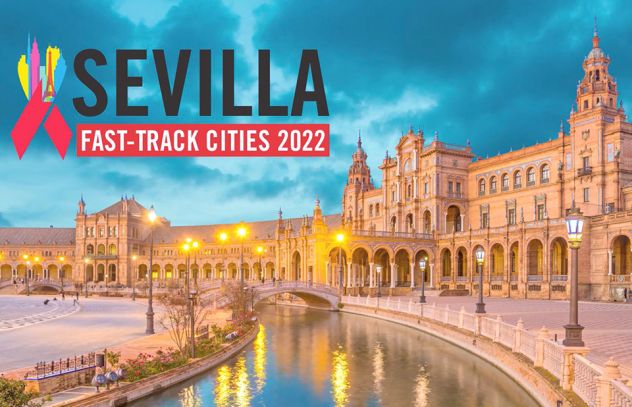
Signed at a Fast-Track Cities conference, the Seville Declaration urges "the centrality of affected communities in urban responses to HIV"
People living with and affected by HIV must play a central role in every city's efforts to end the epidemic. To ensure this happens, global HIV leaders drafted and signed the Seville Declaration on the Centrality of Communities in Urban Responses to HIV.
In early October, it established 10 commitments that cities are asked to make. These commitments will help focus the HIV community on local efforts to combat the epidemic.
The Cities on the Fast Track initiative is a partnership that includes 450 cities worldwide (and more are joining all the time!) and global HIV/AIDS organizations with the goal of advancing and coordinating efforts to end HIV in urban settings by 2030. The initiative was spearheaded by the International Association of AIDS Care Providers (IAPAC), the Joint United Nations Programme on HIV/AIDS (UNAIDS), the United Nations Human Settlements Programme (UN-Habitat), and the City of Paris.
“The Seville Declaration provides a framework for communities of people living with HIV to more formally take a leading role in HIV responses at the city and municipal levels,” said Sbongile Nkosi, co-executive director of GNP+, in an IAPAC press release about the Seville Declaration. GNP+ formally endorsed the declaration at the Fast-Track Cities 2022 conference.
Nkosi added: “We talk a lot about ‘putting people at the center of the HIV response,’ but the Seville Declaration goes further by articulating the commitments that local governments and institutions must make to create the space and empower people living with HIV and their community organizations to lead urban responses to HIV.”
Published and signed on October 11, 2022, the Seville Declaration calls on cities and municipalities to commit to the following:
Safeguarding the dignity and rights of communities affected by HIV, tuberculosis, and viral hepatitis.
To meet the United Nations goals for community-led responses to HIV, tuberculosis and viral hepatitis.
Include community representation at all stages of our responses to HIV, tuberculosis, and viral hepatitis.
Facilitate community monitoring of our responses to HIV, tuberculosis, and viral hepatitis.
Improve transparency and communication to facilitate community participation.
Develop outreach strategies to identify and reach all stakeholders in the community.
Supporting community health workers, peer leaders, and other people close to our communities.
Working to eliminate stigma and discrimination against and within our diverse communities.
Connecting our local communities with global HIV, tuberculosis, and viral hepatitis networks.
Report annually on the progress made in relation to placing communities at the centre of our work
For more details on each commitment, please read and download the full text of the Seville Declaration.
“An amorphous and overly malleable term like ‘putting people at the center’ of the HIV response has little effect if it can be interpreted in a million different ways or, worse, if it becomes a mere symbolic act that disenfranchises those whose voice at the table and leadership are critically needed,” said José M. Zuniga, IAPAC President and CEO, in the statement.
"The 10 commitments that the Fast Track Cities are making by signing the Seville Declaration reflect an important step forward in clearly defining, implementing and facilitating what we mean by 'putting people at the centre' of urban responses to HIV at a time when it is most critical to do so."
You can watch the plenary speeches from the Fast-Track Cities Conference 2022 in Seville on IAPAC's YouTube channel below:
The Seville Declaration will complement the Paris Declaration of Cities on the Fast Track to End the HIV Epidemic, a document published and signed with the launch of the Cities on the Fast Track initiative. The Paris Declaration established the following targets, known as the 90-90-90 targets, that cities aimed to achieve:
To ensure that 90% of people living with HIV know their status;
To ensure that 90% of people who know their serological status receive treatment against HIV;
To achieve an undetectable viral load in 90% of the people taking the medication.
Several U.S. cities are participating in the Fast Track Cities initiative, including Baton Rouge (Louisiana), Denver (Colorado), Minneapolis (Minnesota), New York, and San Francisco.