
Laura Plitt, BBC Mundo
Fifty years after Robert Rayford's death, a cure for HIV/AIDS has still not been found, but with the right treatment, infected people can lead healthy lives.
When Robert Rayford was admitted to City Hospital in St. Louis, Missouri, USA, towards the end of 1968, his health was already seriously deteriorated.
For almost two years, this African American teenager had been suffering from an illness that baffled doctors.
Not only did they not understand the cause of the swelling that spread through her legs and genitals, they also couldn't seem to find a suitable treatment.
Neither the antibiotics he was given for seven weeks nor the restriction on salt and water intake had any effect on this shy 15-year-old who barely uttered a few monosyllables when doctors examined him.
After months of agony, his condition worsened considerably: he had lost significant muscle mass, showed signs of three different tropical infections (something they were able to identify retrospectively), and his immune system was not responding as expected.
On the night of May 15, 1969, Robert Rayford finally died of pneumonia.
For the medical team that closely monitored his progress, his death left countless questions: If Rayford had never left Missouri, how could he have become infected? Why were no treatments effective? How was it possible that the chlamydia bacteria found in his body was disseminated throughout his bloodstream and not localized, as it usually is, near the port of entry?
It took nearly two decades for the mystery to be revealed: the young man had contracted the human immunodeficiency virus (HIV).
Today, Robert Rayford is considered the first recorded death from AIDS in the United States.
A young man who was "very uncommunicative"
The first time Memory Elvin-Lewis saw Rayford was at Barnes Hospital, affiliated with the Washington University School of Medicine.
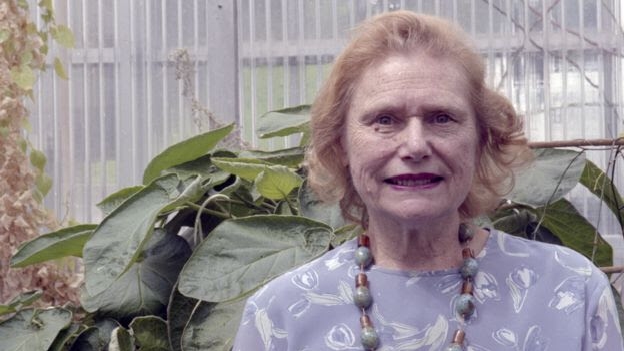
"He was in bed, covered up to his shoulders and surrounded by a large group of doctors," the emeritus professor of microbiology and ethnobotany who worked on the case, and whose contribution was crucial in recognizing the disease he suffered from decades later, tells BBC Mundo.
Microbiologist Elvin-Lewis was brought in to work on the case because she specialized in chlamydia.
"He was a very uncommunicative child. He had a vacant stare and didn't say anything," recalls the microbiologist, who doesn't dare speculate whether his silence was due to feeling intimidated or because "he wasn't very intelligent," as several members of the medical team said.
The truth is that "at that moment he did not answer the questions they asked him" to arrive at a diagnosis.
The only information he had reluctantly provided was that he had never ventured outside the American Midwest, and that the only sexual relations he had ever had were with a girl from his neighborhood.
When it was discovered that he had lymphogranuloma venereum (a rare sexually transmitted disease caused by the chlamydia bacteria that is usually seen in tropical regions of Africa, the Caribbean and Vietnam), the young man "denied having had other sexual contacts and resisted having an anal examination," Elvin-Lewis notes.
Complex symptoms
Since Elvin-Lewis's specialty was chlamydia, the team called her in to evaluate the case.
"The clinical presentation was much more complex than that of a classic lymphogranuloma venereum, and its immune responses were not as high as one would expect in these cases," says the expert.
AIDS awareness campaigns promote the use of condoms and other measures to prevent the spread of the disease.
"But as his illness progressed, other things began to appear," he adds.
Elvin-Lewis refers to the numerous internal skin lesions known as Kaposi's sarcoma that became evident when an autopsy was performed after his death.
"Kaposi's sarcoma was not a common disease in North America," the expert points out, adding that, in any case, its most common manifestation is in men over 60 years of age from the Ashkenazi Jewish community or the Mediterranean.
Another detail revealed by the autopsy was the presence of scars on the anus, which raised suspicions that Rayford may have been homosexual or, as Elvin-Lewis believes possible, a victim of sexual abuse.
The case left so many enigmas that Elvin-Lewis made a fundamental decision that proved to be key to solving the mystery: he took a series of tissue and blood samples and kept them in the refrigerator.
"People usually throw things away because they don't have room in the refrigerator. But I don't throw things away," the emeritus professor tells the BBC.
Every December 1st since 1988, World AIDS Day is celebrated.
"I have a feeling that, eventually, technology will appear that will allow us to evaluate something that is impossible to evaluate at the moment you are doing the work."
These samples remained under his care for nearly two decades, until a series of cases of homosexual men suffering from a rare form of pneumonia began to appear in the early 1980s.
Shortly afterwards, another rare disease began to plague the gay community: Kaposi's sarcoma.
HIV/AIDS enters the scene
All of these patients showed signs of a compromised immune system.
By 1982, the term AIDS (acronym for Acquired Immunodeficiency Syndrome) had already been coined.
Alerted by these strange similarities, another expert who worked on the Rayford case, lymphologist Marlys Witte, asked Elvin-Lewis for the samples and sent them for analysis.
The results were made public in 1987.
"Case shakes up theories of the origin of AIDS," read the headline of the Chicago Tribune that broke the results in October 1987. "Local youth may have died of AIDS in 1969," read the front page of the St. Louis Post-Dispatch.
Tests revealed that samples taken from Robert Rayford's body "contained antibodies for each of the HIV proteins used in the test," the Chicago Tribune article said.
The discovery not only helped solve the mystery surrounding Rayford's death, but also revealed that AIDS arrived in the United States much earlier than previously suspected.
"I'm sure HIV was in the US long before then, but it hasn't been studied because no one has preserved samples. Retrospective microbiology is very important in many ways," Elvin-Lewis concludes.
Empathy
But beyond the scientific lessons we can learn from the case, the microbiologist highlights what we can take from this story from a more human perspective.
A simple blood test can detect HIV.
"It is important to have empathy for people who contract these diseases through their own practices or by other means, such as through contaminated blood."
"We need to be kinder and more understanding (to them)."
50 years after Robert Rayford's death, the disease still has no cure and has not been eradicated.
However, today there are effective drug treatments that allow most people to reach old age and live a healthy life.
And, with early diagnosis and treatment, many people who contract HIV will not develop AIDS-related illnesses and will live for a similar number of years to a healthy person.
From: https://www.bbc.com/mundo/noticias-48859451