
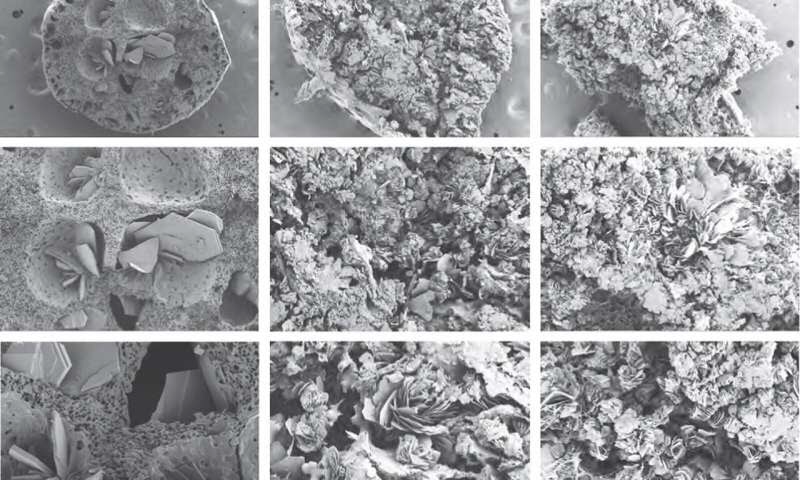
A new study published today in Nature Communications shows a promising alternative for those who have to take a daily pill regimen. Focused on HIV treatment and prevention, researchers from several departments at the University of North Carolina at Chapel Hill collaborated on a seven-year animal study to create an improved injectable drug implant that can combine multiple drugs and is ultra-long-acting, while also addressing many of the challenges faced by current HIV treatment and prevention methods.
“There is no FDA-approved or marketed technology for long-acting HIV prevention, and we are the first to use this delivery method with multiple antiretroviral drugs,” said Rahima Benhabbour, Ph.D., MSc, first author of the study and assistant professor in the Joint Department of Biomedical Engineering at UNC-NCSU. “Having an HIV prevention treatment that consists of a single injection once or twice a year would have an incredible impact on patients.” She added, “This technology is not only promising for HIV, but for any type of condition that requires daily medication intake. We’re talking about a safe, removable, and long-lasting injection that eliminates the burden of adhering to a daily medication regimen.”
Antiretroviral drugs are used both in the prevention and treatment of HIV, and multiple types are used in combination to counter resistance to any one antiretroviral drug.
These medications must be taken consistently every day. There are many obstacles that hinder adherence to these medication regimens. Benhabbour says this is especially true for healthy people trying to prevent infection.
“In sub-Saharan Africa, where HIV prevalence is highest, access to these medications can be difficult, and there is a lot of stigma associated with the virus,” Benhabbour said. “It’s very important for someone who doesn’t have HIV to do everything possible to access not only the medications but also to understand the implications of living with HIV by taking a pill every day.”
There's also the factor of human error. Anyone who struggles to take a daily multivitamin can understand that some days the pill is missed or taken at a different time of day. But such small deviations can make antiretroviral medications less effective.
"Because one of the biggest difficulties associated with HIV prevention is the lack of adherence to drug treatment, we wanted to create a drug delivery system that would essentially solve this problem," said lead author J. Victor Garcia, Ph.D., professor of medicine at the UNC School of Medicine, director of the International Center for Advancing Translational Science, and a member of the UNC Center for AIDS Research.
The injectable implant consists of three elements: an organic solvent, a polymer, and the drug or drugs to be administered. The formulation results in a honey-like liquid that solidifies when injected under the skin. This phase inversion occurs when the solvent diffuses into the body, leaving behind the polymer and the drugs. The combination of these components determines the duration of the drugs' release into the bloodstream.
In this study, six antiretroviral drugs were tested, and all maintained their physical and chemical properties within the formulation and at the time of release. All six were also released from the implant at effective levels for a sustained period ranging from one month to one year.
The injectable drug implant created by the UNC research team is the first to address several drawbacks of the current method of delivering long-acting HIV drugs, namely, the ability to remove it and quickly eliminate the presence of residual drugs in the system.
"If a patient needs to withdraw from treatment because she has had a negative reaction to the drug(s), or perhaps a woman has become pregnant, our implant can be easily removed surgically," said Martina Kovarova, Ph.D., a contributing author of the study and an associate professor of medicine at UNC SOM.
This is the first injectable HIV implant that can be removed as early as one week or as late as months after injection, with drug levels virtually eliminated from the system within a week. If removal is not required, the implant biodegrades into lactic and glycolic acids, which are already present in the body and readily absorbed.
The researchers plan to continue developing and improving this multi-drug delivery system, observing its effects in relevant in vivo models and eventually in humans.
Further information: S. Rahima Benhabbour et al. Ultralong-acting, biodegradable, removable, adjustable-release drug delivery implants, Nature Communications (2019). DOI: 10.1038/s41467-019-12141-5
Information from the journal: Nature Communications
by University of North Carolina Health Care
From: https://medicalxpress.com/news/2019-09-long-acting-multi-drug-implant-hiv-treatment.html