
CROI 2021 Report by Jules Levin
When HIV-positive men and women reach age 70, the rates of having five or more comorbidities increase significantly. For HIV-positive women, these rates increase much more after age 60. These large increases also occur for HIV-positive men after age 60, but the increases are greater for HIV-positive women. Lauren F. Collins1, Frank Palella2, Cyra C. Mehta1, JaNae Holloway1, Valentina Stosor2, Jordan Lake3, Todd Brown4, Kathryn Anastos5, Seble Kassaye6, Adaora Adimora7, Mirjam-Colette Kempf8, Susan L.Koletar9, Phyllis Tien101, Igho Ofotokun Anandi N. Sheth1 1Emory University, Atlanta, GA, USA, 2Northwestern University, Chicago, IL, USA, 3University of Texas at Houston, Houston, TX, USA, 4The Johns Hopkins University, Baltimore, MD, USA, 5Albert Einstein College of Medicine, Bronx, NY, USA, 6Georgetown University, Washington, DC, USA, 7University of North Carolina at Chapel Hill, Chapel Hill, NC, USA, 8University of Alabama at Birmingham, Birmingham, AL, USA, 9 The Ohio State University, Columbus, OH, USA, 10 University of California San Francisco, San Francisco, CA, USA.
Background: Non-AIDS comorbidities (NACMs) occur earlier and more frequently among people living with HIV (PWH) than among their HIV-negative peers (HIV-). HIV may also have a differential impact on the burden of NACMs experienced by women versus men.
Methods: Participants with PWH and HIV followed in the MACS/WIHS Combined Cohort Study (MWCCS) from 2008/2009 (when >80% of male/female participants were using antiretroviral therapy) with outcomes measured up to 03/2019 were included. Age, covariates, prevalence of NACM, and NACM burden (total number of 10) were summarized at the last observation. Unadjusted and adjusted linear regression models (race, body mass index [BMI], smoking, alcohol consumption, crack/cocaine use, socioeconomic status) assessed the effects of HIV serological status, age, and sex on NACM burden.
Resultados:Las mujeres (2316 PCH, 922 VIH-) frente a hombres (1452 PCH, 1239 VIH-) tenían una mediana de edad de 51 frente a 58 años, una mediana de IMC de 30 frente a 26 kg / m2, el 65% frente al 25% eran de raza negra y el 78% vs 32% tenía ingresos <150% del nivel federal de pobreza, respectivamente. En general, la prevalencia individual de NACM osciló entre 9 y 71%, y la distribución para mujeres / hombres fue: hipertensión (68% / 75%), enfermedad psiquiátrica (55% / 58%), dislipidemia (41% / 64%), hígado (34% / 38%), enfermedad ósea (42% / 19%), pulmonar (38% / 10%), diabetes (24% / 17%), cardiovascular (15% / 15%), riñón (14% / 15%) enfermedad y cáncer (7% / 12%). La carga media de NACM fue mayor entre las mujeres que entre los hombres (3,4 frente a 3,2, p = 0,015). En el modelo no ajustado, la diferencia media estimada en la carga de NACM fue significativamente mayor para las mujeres que para los hombres en todos los estratos de edad entre las PCH (todas p <0,05): +0,33 (<40 años), +0,37 (40-49 años), +0,38 ( 50-59y), +0,66 (60-69y), +0,62 (≥70y); sin embargo, difirieron entre las mujeres y los hombres por estratos de edad entre los participantes con VIH: +0,52 (<40 años, p = 0,01), -0,07 (40-49 años, p = 0,72), +0,88 (50-59 años, p <0,01), +1,39 (60-69 años, p <0,01), +0,33 (≥70 años, p = 0,46) [interacción VIH * edad * sexo, p <0,01]. En el modelo ajustado, los hallazgos se atenuaron, pero el VIH y la edad aún modificaron significativamente la carga estimada de NACM por sexo (interacción VIH * edad * sexo, p = 0,038 )
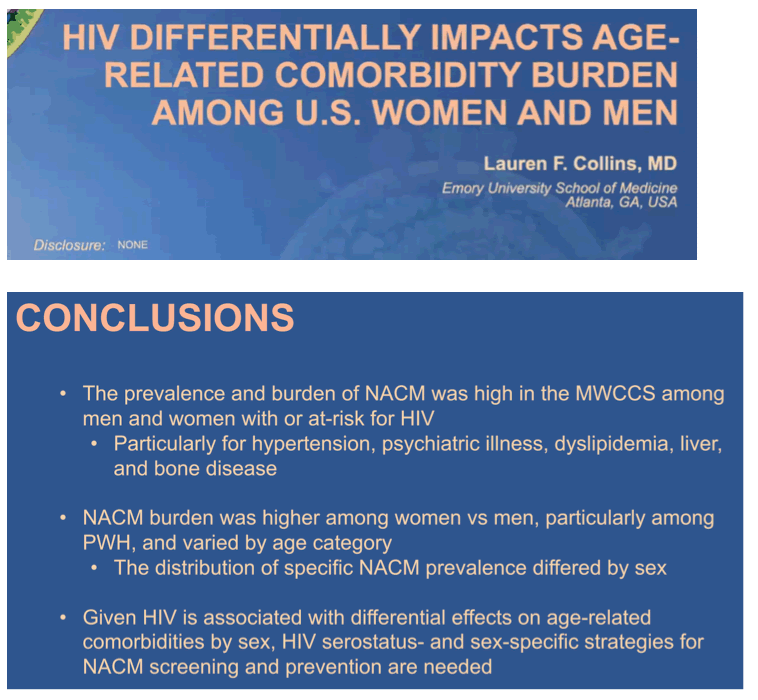
Conclusion: The prevalence and burden of community-acquired comorbidities (CACMs) were high in the MWCCS among men and women with or at risk of HIV infection, particularly for hypertension, psychiatric disorders, dyslipidemia, and liver and bone diseases . The burden of CACMs was higher in women than in men, particularly among women living with HIV (WHI), and the distribution of CACM-specific prevalence differed by sex. Given that HIV is associated with differential effects on age-related comorbidities by sex, sex- and HIV-status-specific strategies are needed for the detection and prevention of CACMs.