
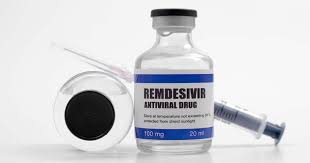
In the space of a week, remdesivir has gone from being dismissed as a treatment for COVID-19 in the WHO's 'Solidarity' study to having final approval from the US FDA.
By Sonia MorenoMar
These are two seemingly contradictory pieces of news: on the one hand, the World Health Organization (WHO) published a preprint on medRxiv with data from its Solidarity trial, which showed that none of the treatments tested for COVID-19, including the antiviral remdesivir, reduced patient mortality . On the other hand, the US Food and Drug Administration (FDA) granted remdesivir full approval as a treatment for COVID-19 patients requiring hospitalization.
Remdesivir had already received emergency use authorization from the agency – including the European Medicines Agency (EMA ). With this final approval, it becomes the first and, for now, only antiviral indicated for COVID-19 . Specifically, it is indicated for adults and children 12 years of age and older (weighing over 40 kg) who require hospitalization due to the disease.
The FDA has based its approvals on three trials, including the ACTT-1 study, sponsored by the National Institute of Allergy and Infectious Diseases (NIAID) of the U.S. National Institutes of Health (NIH) and published (after peer review) in The New England Journal of Medicine . This double-blind, randomized, placebo-controlled, phase III trial showed, in more than 1,000 hospitalized COVID-19 patients, a significant and faster clinical improvement with remdesivir compared to placebo across a range of variables.
It may sound obvious, but remdesivir is an antiviral and works by reducing the virus's ability to replicate.
The WHO's Solidarity trial suggests that the drug has little effect on COVID-19 mortality . Of the more than 2,700 hospitalized patients who received it, 11% died, compared to 11.2% in a control group.
This study began in March with the aim of measuring the effectiveness of various treatments in reducing mortality, as well as facilitating access to potential COVID-19 treatments for patients worldwide . In 405 hospitals across 30 countries, 11,266 adults were randomly assigned to the drugs (2,750 to remdesivir; 954 to hydroxychloroquine; 1,411 to lopinavir; 651 to interferon plus lopinavir; 1,412 to interferon alone; and 4,088 to neither drug, receiving standard supportive care). According to preliminary results from this large trial, none of these medications reduced hospital mortality.
But remdesivir stands out among all the others, as it is the only one that has the backing of regulatory agencies . In fact, it is the first and only antiviral approved for COVID-19.
So what explains the discrepancies between studies? One of the reasons given is the mixing of different patients – severity, onset of symptoms – when drawing conclusions.
It may sound obvious, but it's important to remember that remdesivir is an antiviral and works by reducing the virus's ability to replicate: if the patient has no virus, the drug won't have any effect. Or, in the words of Alex Soriano, head of Infectious Diseases at the Hospital Clínic in Barcelona and one of the researchers in the remdesivir trials in Spain , “antivirals work when administered to a patient who has the virus. Remdesivir's effectiveness doesn't depend on the type of patient, but rather on whether they have the coronavirus.” This relates to the well-known two phases of COVID-19 , on which there is broad scientific consensus. Patients with severe illness have the virus until day 12 or 13—perhaps at most until day 15—but the highest viral load is recorded during the first week of illness. “It's logical to think that the antiviral will be more effective the sooner we administer it.”
According to Soriano, a major methodological problem with the Solidarity trial is that it analyzes patients with severe illness (requiring oxygen) mixed with others who are even more severely ill (requiring high-flow oxygen). It also fails to provide the number of days of symptoms experienced by the treated patients, “key information.”
Repositioning at the start of the pandemic
During the pandemic, remdesivir emerged as a great hope, as it is a drug that acts on an enzyme present in various RNA viruses. Furthermore, its safety was already supported by previous trials that had tested the drug against the Ebola virus.
Gloria Renedo, from the Intensive Care Unit at the University Clinical Hospital of Valladolid , explains her experience with the drug at her center during the beginning of the first wave of COVID-19. In a presentation at the congress of the Spanish Society of Intensive Care Medicine, Critical Care, and Coronary Units (SEMICYUC) , which is being held this week, she hints at what might have happened with this treatment in other parts of the world. “In the context of a clinical trial, we administered it to critically ill, intubated patients in the ICU who were deteriorating after first-line treatment had failed. Our subjective impression is that the patients progressed well, but this remains anecdotal , since our series includes very few patients and lacks statistical consistency,” she points out. The intensivist highlights one of remdesivir's strengths, on which experts agree: the absence of adverse effects . In any case, these are not the indications that are currently being considered, which makes it difficult to implement in the intensive care unit: "Normally, treatment now begins on the ward."
As indicated in the ministerial guidelines
The administration of remdesivir for its approved indications is included in the clinical guidelines of the Spanish Ministry of Health and those of Spanish hospitals. “Our clinical experience indicates that it works, but this type of perception shouldn't guide us,” warns Estrada: “ During the first wave, we also had the perception that other drugs were effective, and studies have ultimately disproven this. We must be guided by the tools of scientific research and by what clinical trials indicate .” For now, the Solidarity trial is keeping the remdesivir arm open until it is published after passing peer review. Along with the standard treatment arm, these are the only two arms currently underway, although it is expected that others will be added, though this is yet to be confirmed, which will include monoclonal antibodies and dexamethasone.
One of the ministerial guidelines for its use is that the patient should have fewer than seven days of symptoms. “That’s probably not entirely accurate, since there are patients who are admitted after eight or ten days and still have the virus,” says Soriano, referring to the variability of the disease's phases, which, like everything in medicine, are not confined to fixed timeframes. The two phases of COVID-19, this doctor argues, exist “in a gray area between day four and day ten.” The impact of the antiviral is influenced by the presence of the virus, but also, in part, by the patient's condition.