
By Barbara Jungwirth and Myles Helfand
During the first few months of the COVID-19 pandemic, the HIV community was paralyzed by one central question: Does HIV increase the risk of COVID-19 infection or the severity of the disease?
The data on that front, for the most part, has been reassuring: there is no pattern of evidence to suggest that HIV worsens the risk or outcomes of COVID-19, particularly among people on antiretroviral treatment with a suppressed viral load.
It is possible that there is a sharp increase in unsuppressed HIV rates in the COVID era.
During the COVID-19 pandemic, people living with HIV (PLWH) who typically receive care at a safety-net clinic have experienced serious challenges in maintaining viral suppression, researchers reported in AIDS .
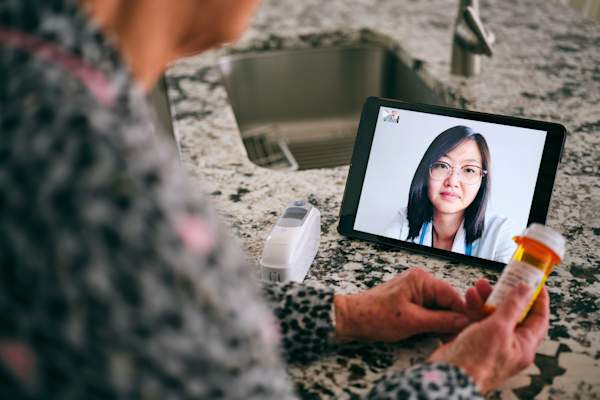
Ward 86, a large HIV clinic in San Francisco, California, immediately transitioned to telehealth when the quarantine order was announced earlier this year. Clinic visits were conducted by phone, and viral load tests were scheduled as quick lab visits.
The proportion of clients who did not show up for scheduled appointments did not change appreciably between telephone and in-person visits before and after the lockdown. However, the odds of not being virally suppressed increased by 31% after the city's COVID lockdown . This may be partly due to the lack of availability of social support services typically provided at the clinic, the authors hypothesized.
Viral suppression rates fell even further among people who experienced homelessness, and the economic impact of isolation may have caused more urgent survival needs to be prioritized over HIV care, the study authors suggested.
"Telemedicine may facilitate retention in care in the shelter-in-place context for those without a digital divide, but it is unlikely to compensate for the loss of clinic-based social services and support for [PLWH] with vulnerabilities."
Repliclones: New potential cause discovered for unsuppressed HIV viral load
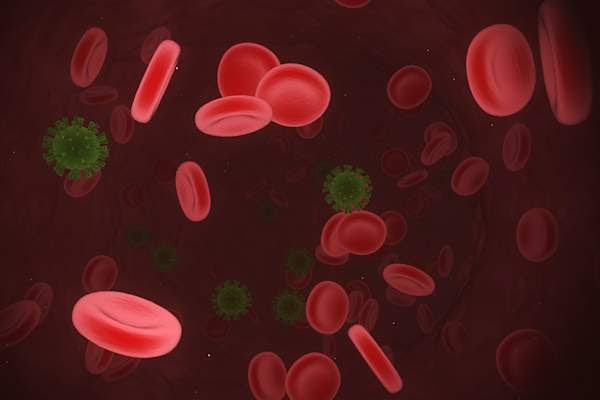
A phenomenon called "repliclones" may help explain unsuppressed viral loads in PLWH who are taking their medications and whose virus is not resistant to their current drug regimen, a small study published in The Journal of Clinical Investigation found.
Researchers sequenced HIV from eight people who had previously been virally suppressed, were adherent to their HIV medications, and were not resistant to their current antiretroviral regimen. They found identical viral RNA sequences that did not change over time in the plasma of each participant, an indication that these were clones of HIV-1-infected cells , rather than viral spread between cells (which would have resulted in some mutations). In half of the samples, the virus was able to replicate.
The clone groups were quite large (50 million to 350 million cells), but still constituted a small fraction of infected cells.
This discovery raises several questions, such as: How and why do these repliclons develop? How many people are affected? What does this mean for HIV care?
However, one thing is clear: if repliclons are the underlying cause of a person's lack of viral suppression, changing that person's medication regimen or providing additional adherence counseling will have no effect. This means that patients who are viremic despite adherence to antiretroviral therapy and without resistance mutations would require close monitoring rather than a regimen change , advised study author John Mellors, MD, in a press release.
The findings could also complicate research into a cure for HIV, as these cloned cell sets may represent a previously unappreciated viral reservoir that must be addressed for a "shock and kill" strategy to work.
Benefits of rapid HIV/HCV testing versus point-of-care laboratory testing
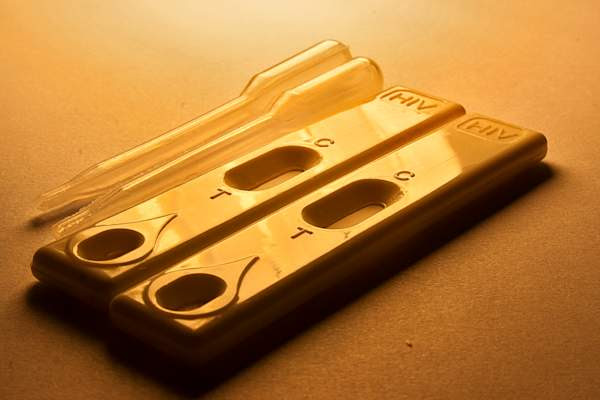
Providing rapid HIV and hepatitis C (HCV) tests at a person's point of care (such as a drug detox center) is a far more reliable way to ensure people actually receive their results than sending samples to a lab, according to a study published in the Journal of Infectious Diseases . While the findings may seem intuitive, they come amid the reality that roughly half of U.S. state health department sites use lab tests (which can detect acute infections) rather than rapid tests (which cannot).
Two hundred people at a drug/alcohol detoxification center in Boston were randomized to receive either rapid (n = 98) or laboratory (n = 102) tests. Ninety-six percent of participants in the rapid test arm received their results compared to 42% in the laboratory arm. Overall, 0.5% received a new HIV diagnosis and 48% were HCV seropositive.
The study also highlighted later problems with continuity of care: once notified, only 6% of participants who tested positive were linked to care within four months. Emergency department visits after leaving the detox center would have provided an opportunity for linkage to care if the center's test results had been available to the emergency department, the study authors noted.
This already low follow-up rate has likely worsened as a result of COVID-19, a press release noted. “We hope these findings will encourage changes in local and national HIV and HCV testing practices and policies in non-hospital settings serving at-risk populations during the opioid epidemic,” said study author Sabrina Assoumou, MD, MPH, in the release.
In today's era of HIV treatment, when to start matters more than what to start with.
No matter what modern antiretroviral regimen people living with HIV start taking, as long as they begin treatment soon after seroconversion, a retrospective cohort study published in AIDS found.
Researchers compared the three-year efficacy of protease inhibitor-based (n = 28), integrase inhibitor-based (n = 87), and non-nucleoside reverse transcriptase inhibitor-based (n = 22) regimens initiated during the acute or early phase of HIV. Overall, 96% of participants were virally suppressed after one year and 99% after three years. Viral suppression rates at one and three years were comparable between the arms , as was CD4 cell reconstitution. Initiating antiretroviral therapy at an earlier Fiebig stage (used to measure HIV disease progression) was associated with a higher rate of individuals having a CD4 cell count above 900 cells/µL.
The findings are especially important for resource-limited settings, where NNRTI-based regimens remain a common first-line treatment, the study authors noted. The results show that this older antiretroviral treatment is as effective as newer INSTIs, although they pointed out that INSTIs were generally better tolerated than PIs or NNRTIs.
The study's limitations included the small number of participants and the fact that few women were included in the study.