
By Joyce Frieden, Washington Editor, MedPage Today
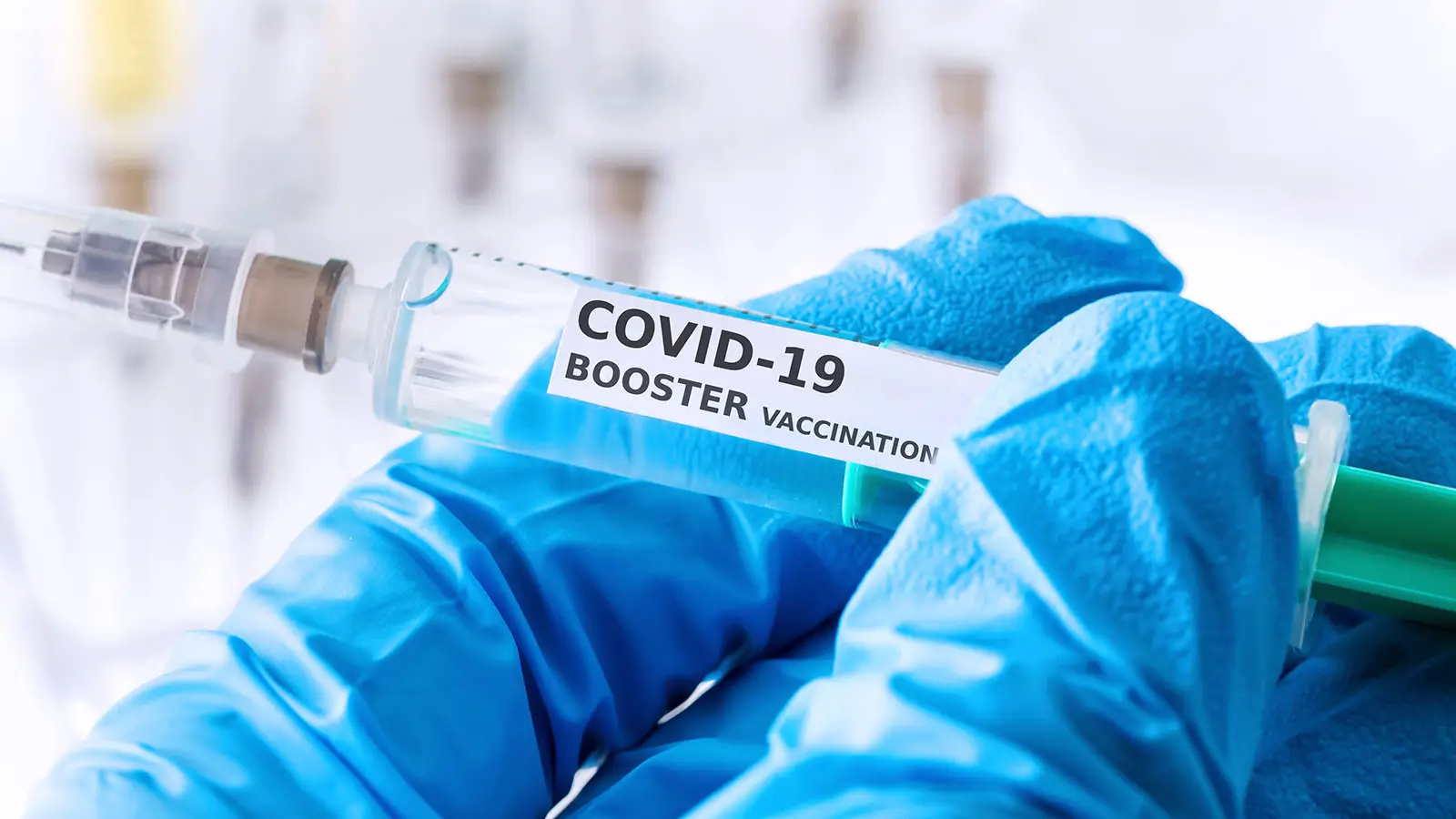
Booster shots against COVID are showing good efficacy in Israel, Dr. Anthony Fauci, President Biden's top medical adviser, said Thursday at a briefing held by the White House COVID-19 Response Team.
Researchers have found that, even with the country's very high vaccination rate, "we see new PCR-positive infections and new severe cases of COVID in fully vaccinated people during the Delta wave in Israel from June 1 to August 1. So clearly, Delta is dominant and is responsible for new cases, including severe illness," said Fauci, who is also director of the NIAID.
The reinforcement clearly helped.
In Israel, a third dose of the Pfizer-BioNTech vaccine was approved for people aged 60 and older. A total of 1.1 million people received this booster dose between July 30 and August 22, "and a fairly substantial positive impact was observed," Fauci continued, referring to a preprint study by Yinon Bar-On of the Weizmann Institute of Science and colleagues, published on MedRxiv.
"Twelve days or more after the booster dose, there was a more than tenfold decrease in the relative risk of both confirmed infection and severe disease," Fauci said.
The likelihood of testing positive with two doses versus three doses of the Pfizer vaccine was analyzed in another preprint study published on MedRxiv by Dr. Tal Patalon of Maccabi Healthcare Services and his colleagues. In that study, among "more than 150,000 people in the first three weeks of August, they found up to a 68% reduction in the risk of infection after 7 to 13 days" if a third dose was administered, Fauci said.
"And after 14 to 20 days, a 70% to 84% reduction in the risk of infection." There is no doubt that the dramatic data from the Israeli study, the reinforcements now being made there and considered here, strongly support the justification for this approach.
During a question-and-answer session, Fauci was asked if the US support for booster shots was sending a message to other wealthy nations encouraging them to save their extra doses for boosters instead of donating them to other countries that need them.
“I hope that countries that are experiencing population growth similar to ours understand the importance of the global need to suppress this worldwide,” Fauci said. “That’s why the United States is leading by example” by also donating hundreds of millions of doses to other countries.
Will a third dose be "fully vaccinated" soon?
Fauci was also asked if he expected the United States to consider people who have received the third booster dose fully vaccinated. That determination will depend on the FDA once it has the data on all three doses and the recommendation from the CDC's Advisory Committee on Immunization Practices, he said. "But I must say, from my own experience as an immunologist, I wouldn't be at all surprised if the appropriate full vaccination regimen is probably three doses."
"The reason I say this is that it's very clear that when you administer a first and perhaps a second booster dose, but give the immune system sufficient opportunity to mature both in affinity maturation and in B cell repertoire maturation, it's entirely understandable why the results I just reported from the Israeli boosters are so spectacular," he continued.
There are good reasons to believe that the third dose generates a strong and lasting response, he said. "And if it's lasting, then it's very likely that a three-dose regimen will become the routine regimen. But we'll have to wait to be sure of that, until the data is submitted to the FDA."
Vaccination of adolescents
Also during the briefing, CDC Director Dr. Rochelle Walensky discussed the effectiveness of the COVID vaccine in adolescents. She said that two studies on this topic will be published in the MMWR on Friday.
“These studies compare pediatric cases, emergency room visits, and hospitalizations during the previous winter wave, when vaccination rates were low, with this summer, when adult and adolescent vaccination coverage increased and the Delta variant is the dominant variant,” he explained. “In both studies, one thing is clear: cases, emergency room visits, and hospitalizations are much lower among children in communities with higher vaccination rates. Vaccination works.”
The first study analyzed data from hospitals in 99 counties across 14 states.
“The hospitalization rate among unvaccinated adolescents—ages 12 to 17—was nearly 10 times higher than that of fully vaccinated adolescents during the month of July,” Walensky said. “The second study analyzed national emergency room visits and hospitalizations and found that in August 2021, the hospitalization rate for children was nearly four times higher in states with the lowest overall vaccination coverage compared to states with high overall vaccination coverage.”
He acknowledged that “as cases increased throughout July and August, so did the number of children becoming ill with COVID. From the end of June through mid-August, in the context of low community vaccination coverage and the rapid spread of the Delta variant, cases among children and adolescents aged 17 and under increased almost 10-fold, which coincides with the increase observed for the general population.”
However, despite the increase in the number of cases, he said, "these studies showed that there was no greater severity of the disease in children. On the contrary, more children have COVID-19 because there is more disease in the community."
"What's clear from this data is that community-level vaccination coverage protects our children," he added. "As the number of COVID-19 cases in the community increases, so will the number of children going to the emergency department and being hospitalized."
The Mu variant is being closely monitored
The panelists at the briefing were also asked about their opinion on the “μ” (Mu) variant, which the WHO on Wednesday called a “variant of concern.” Fauci said the administration is monitoring the new variant “very closely.” However, he added, “it is nowhere near being dominant.”
Although this variant "has a constellation of mutations that suggests it would evade certain antibodies, not only monoclonal antibodies but also those induced by vaccines and convalescent serum, there is not much clinical data to suggest this," Fauci said.
"It's mostly in vitro laboratory data... But it's important to remember that even when there are variants that slightly reduce the effectiveness of the vaccines, they are still quite effective against those specific variants. In short: we're paying attention to it, we're taking it all seriously, but we don't consider it an immediate threat at this time."