
Las opciones pragmáticas dominan a medida que las pautas se perfilan
por Crystal Phend, Editor Senior, MedPageT
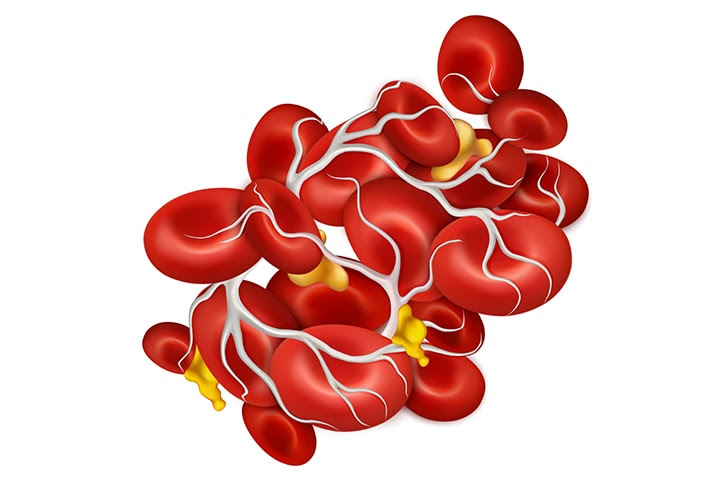
Los problemas de coagulación sistémica que surgen en pacientes con COVID-19 graves y en estado crítico están presionando a los centros para que tomen decisiones difíciles sobre la anticoagulación con escasez de información.
Los médicos chinos han notado la coagulación intravascular diseminada en el frente inicial de la pandemia. Las autopsias que muestran coágulos en «no solo los pulmones sino también en el corazón, el hígado y los riñones» se describieron en un seminario web copatrocinado por la Asociación Cardiovascular China y el Colegio Americano de Cardiología en marzo.
El dímero D elevado, un producto de degradación de fibrina que indica trombosis, al ingreso también se ha relacionado con probabilidades sustancialmente más altas de muerte en el hospital entre los pacientes con COVID-19 en Wuhan, China.
«Lo que realmente ha quedado claro en las discusiones en las últimas 2 semanas es que la enfermedad COVID-19 está muy asociada con la trombosis: coágulos de vasos grandes, TVP / EP [trombosis venosa profunda / embolia pulmonar], quizás eventos arteriales y potencialmente pequeños enfermedad de los vasos, trombosis microvascular «, dijo el Dr. Stephan Moll, de la Universidad de Carolina del Norte en el Centro de Hemofilia y Trombosis de Chapel Hill.
A medida que los casos en EE. UU. Se han disparado, también ha quedado claro que los pacientes hospitalizados a menudo desarrollan coágulos de sangre a pesar de estar bajo anticoagulación profiláctica, dijo a MedPage Today .
«La pregunta es si todas las personas con COVID-19 en el hospital deberían tomar anticoagulantes, y la respuesta es probablemente sí», dijo. «¿Deberían estar en dosis profilácticas más altas de lo habitual? Y la respuesta es posiblemente sí».
Ahora, se está considerando la dosis completa de anticoagulación incluso si los pacientes no tienen coágulos sanguíneos documentados, dijo, «porque puede ser una trombosis microvascular en el pulmón, en los riñones que conduce a insuficiencia pulmonar e insuficiencia renal y, finalmente, a la muerte».
Desafíos clínicos
«Incluso el diagnóstico de eventos trombóticos es difícil en esta población debido al riesgo de exposición al realizar las pruebas, así como a las pruebas de dificultad para eventos microtrombóticos», comentó Ajay Kirtane, MD, SM, director de los laboratorios de cateterismo cardíaco en la Universidad de Columbia Irving. Centro médico / NewYork-Presbyterian Hospital en la ciudad de Nueva York.
Sin conocer la verdadera incidencia de los eventos, dijo a MedPage Today , «la anticoagulación empírica con antitrombóticos de dosis completa o parcial es una pregunta tan interesante».
Sin embargo, los médicos tienen que sumergirse, y muchos centros y algunas sociedades profesionales están publicando pautas pragmáticas, según Moll.
La Sociedad Internacional de Trombosis y Hemostasia recomendó recientemente que todos los pacientes hospitalizados con COVID-19, incluso aquellos que no están en la UCI, reciban heparina de bajo peso molecular (HBPM) con dosis profilácticas, a menos que tengan contraindicaciones (sangrado activo y recuento de plaquetas <25 × 10 9 / L).
Las recomendaciones de Gran Bretaña también exigen la profilaxis de TEV para todos los pacientes de alto riesgo, así como considerar la EP para pacientes con deterioro repentino de la oxigenación, dificultad respiratoria y presión arterial reducida. Sugirió HBPM en lugar de anticoagulantes orales, incluido el cambio de pacientes que normalmente toman un anticoagulante oral directo (DOAC) o un antagonista de la vitamina K.
Muchas instituciones están eligiendo valores umbral para comenzar la anticoagulación sistémica alrededor de un dímero D> 1,500 ng / ml y fibrinógeno> 800 mg / ml, señaló Jason Katz, MD, director de cuidados críticos cardiovasculares en el Sistema de Salud de la Universidad de Duke en Durham, North Carolina «Por ahora, nosotros [en Duke] estamos tomando las cosas caso por caso, lo que creo que es razonable a la luz de la pequeña (aunque creciente) base de evidencia».
La heparina de cadena larga (no fraccionada) sería teóricamente preferible entre los anticoagulantes debido a sus efectos antiinflamatorios, señaló Moll, mientras que la HBPM tiene menos efecto antiinflamatorio y los DOAC tienen poco. «Y la inflamación juega un papel importante en COVID-19».
La heparina no fraccionada IV también tiene la ventaja de que se puede detener rápidamente si se produce un sangrado, señaló Katz. Si bien se ha sugerido que la heparina puede influir en la unión del SARS-CoV-2, «esta construcción debe validarse, por supuesto».
Sin embargo, los asuntos prácticos pueden dominar. En la ciudad de Nueva York, Montefiore y muchos otros hospitales han elegido DOAC, señaló Moll. «No quieren que las enfermeras entren en la habitación de los pacientes para administrar la heparina no fraccionada dos o tres veces al día o para ajustar la heparina no fraccionada IV. Es mucho más fácil administrar un anticoagulante oral con una gran cantidad de pacientes». «
Mecanismo
No está claro exactamente por qué el virus causa una coagulación tan extensa.
Tres pacientes de la UCI con COVID-19 en China mostraron respuestas autoinmunes antifosfolípidas, informaron Yongzhe Li, MD, del Hospital de la Facultad de Medicina de la Unión de Pekín en Beijing, y sus colegas en una carta al New England Journal of Medicine publicada el miércoles.
Los tres dieron positivo para anticardiolipina IgA y anti-β2-glucoproteína I IgA e IgG.
«La presencia de estos anticuerpos rara vez puede conducir a eventos trombóticos que son difíciles de diferenciar de otras causas de trombosis multifocal en pacientes críticos, como la coagulación intravascular diseminada, la trombocitopenia inducida por heparina y la microangiopatía trombótica», escribieron.
El dímero D fue superior a 21 mg / L en el primer paciente, que «tenía evidencia de isquemia en las extremidades inferiores bilateralmente, así como en los dedos dos y tres de la mano izquierda. La tomografía computarizada del cerebro mostró infartos cerebrales bilaterales en múltiples territorios vasculares «. Los resultados de laboratorio también mostraron leucocitosis, trombocitopenia, un tiempo elevado de protrombina y tiempo parcial de tromboplastina, y niveles elevados de fibrinógeno.
El dímero D fue de alrededor de 3 mg / L en los otros dos pacientes, ambos tenían infartos cerebrales múltiples en el lóbulo frontal derecho y otras ubicaciones en el cerebro en las imágenes, y otros hallazgos también fueron similares.
El anticoagulante lúpico no se detectó en ninguno de ellos.
Sin embargo, Moll advirtió en contra de sacar conclusiones causales, ya que se sabe que los anticuerpos antifosfolípidos son transitoriamente positivos en el momento de la enfermedad infecciosa aguda. Además, no se informaron los títulos de anticuerpos antifosfolípidos y el análisis de laboratorio utilizado.
El daño endotelial que conduce a la posterior coagulación ha sido promovido como mecanismo por el Dr. Bin Cao, del Centro Nacional de Investigación Clínica para Enfermedades Respiratorias en Beijing, quien ayudó a desarrollar estrategias de tratamiento allí desde el comienzo de la epidemia.
El virus SARS-CoV-2 que causa la enfermedad COVID-19 ingresa a las células a través de los receptores de la enzima convertidora de angiotensina 2 (ACE2), que se encuentran más comúnmente en las células epiteliales alveolares, seguidas de las células endoteliales, señaló Cao en el seminario web CCA / ACC el mes pasado. Cuando el virus se une a estas células, puede dañar el vaso sanguíneo, especialmente la microcirculación de los vasos sanguíneos pequeños, y así estimular la agregación plaquetaria, dijo.
Las autopsias también han mostrado cambios inflamatorios en el corazón con infiltrados inflamatorios mononucleares intersticiales finos, pero sin inclusiones virales en el corazón, agregó Yundai Chen, MD, del Hospital General Chino PLA en Beijing, durante el seminario web. Otros mecanismos potenciales para el daño cardíaco son la lesión miocárdica inducida por hipoxia, el daño microvascular cardíaco y el síndrome de respuesta inflamatoria sistémica.
Moll señaló que cuál de estos mecanismos es dominante es muy importante en el enfoque del tratamiento. «Si la trombosis es la razón principal de la falla multiorgánica, entonces la anticoagulación es realmente importante. La anticoagulación obviamente conduce a un mayor riesgo de sangrado, por lo que no querrá administrarla si ese no es el mecanismo principal».
Otros estudios de autopsia serán importantes para resolver esto, junto con estudios que correlacionen esos hallazgos con el curso clínico, dijo.
Fuente principal
New England Journal of Medicine
Fuente de referencia: Zhang Y, et al «Coagulopatía y anticuerpos antifosfolípidos en pacientes con Covid-19» N Engl J Med 2020; DOI: 10.1056 / NEJMc2007575.