
By Damian McNamara
Dr. Kimberly E. Hanson
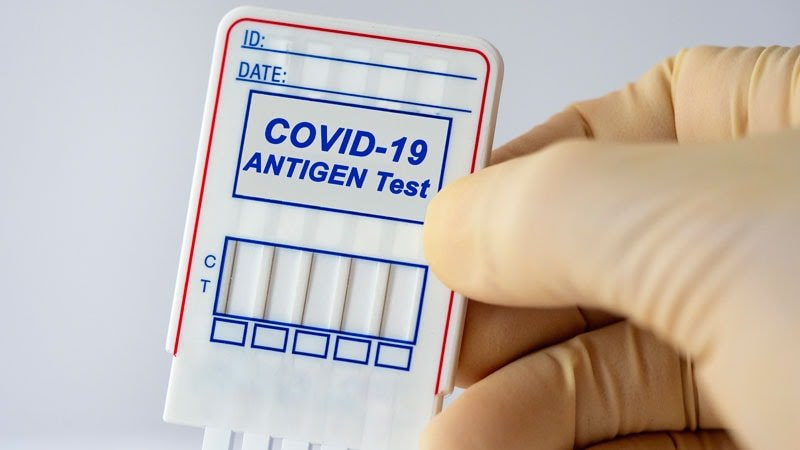
The need for speed led to the widespread adoption of antigen tests for SARS-CoV-2 last year. However, now that the COVID-19 pandemic has evolved, the role of such tests is also changing, suggest new guidelines from the Infectious Diseases Society of America (IDSA).
Not to be confused with the antibody test, which measures the body's immune response to SARS-CoV-2 infection, the antigen test detects proteins from the actual virus. Ideally, in an infected person, a nasal swab collects enough of these proteins to produce a positive result.
"The benefit of the point-of-care rapid antigen test is that it's fast... so it will potentially generate results while a person is present and right in front of you. You can make informed decisions about how you want to handle them," said Kimberly E. Hanson, MD, MHS, during an IDSA press conference on June 2.
In general, point-of-care rapid antigen tests are easier to use and less expensive than the "gold standard" nucleic acid amplification tests (NAATs), added Hanson, associate professor of medicine and adjunct associate professor of pathology at the University of Utah School of Medicine in Salt Lake City. NAATs are laboratory tests that detect viral RNA.
Dr. Angela M. Caliendo
Experts conducted a systematic literature review to compare antigen tests with NAATs. “When we looked at the studies overall, what we found was that antigen tests have a sensitivity of 81% compared to NAATs in symptomatic individuals. It’s even lower when you start testing asymptomatic individuals, around 50%,” Angela M. Caliendo, MD, PhD, professor and executive vice president of the Department of Medicine, Alpert Medical School, Brown University, Providence, Rhode Island, said during the briefing.
For this reason, IDSA recommends using a single standard NAAT instead of a single rapid antigen test for asymptomatic individuals at risk of exposure.
On a positive note, antigen tests have a specificity of almost 100% for detecting SARS-CoV-2.
Antigen tests work best within 7 days of symptom onset, when viral load is highest in the respiratory tract, Caliendo said. This timing could explain the roughly 50% sensitivity of antigen tests for detecting SARS-CoV-2 in asymptomatic individuals.
"By definition, asymptomatic individuals have no symptoms, so we don't really know where on the spectrum of the course of infection we are evaluating them," Hanson explained.
Tests after vaccination
A common question concerns the role of antigen testing among people who have already been vaccinated against COVID-19, including advanced cases.
For this reason, if you have a high clinical suspicion of SARS-CoV-2 infection, even in a vaccinated person, and you get a negative result on the antigen test, "you should back it up with a standard NAAT test," Hanson said.
"It becomes a little more complicated in asymptomatic people who have been vaccinated," he added.
One caveat is that the panel developed the IDSA guidance at a time when highly effective vaccines were not yet available, Hanson said. “Therefore, the role of testing is likely to change as we see more vaccination coverage in the population.”
Look at the local community
The local level of circulating virus is an important consideration, Caliendo said. “If you’re testing someone who has symptoms or a high-risk exposure, and the virus is circulating in the community, the likelihood of getting a false positive result is quite low.” In this scenario, an antigen test might be more appropriate.
Conversely, when testing people without high-risk exposures in a community where circulating virus levels are low—below 1%, for example—"you're much more likely to see false-positive results," Caliendo said. In this case, any positive antigen test should be confirmed by NAAT.
"Taking all of this into consideration, the panel suggested using the NAAT test over rapid antigen tests for symptomatic individuals," added Caliendo, who is also a member of the IDSA expert panel that drafted the updated guidance.
The IDSA panel also recommends NAAT when community prevalence of COVID-19 is 5% or more.
Experts noted that antigen tests can still help identify people with SARS-CoV-2 infection when NAAT is unavailable or not feasible.
Unanswered questions
Experts considered whether repeated or serial testing, even with a less sensitive assay, would improve the detection of asymptomatic infection. However, they did not find sufficient evidence in the literature to make a recommendation either way.
Another question is whether antigen tests can identify an infectious person.
“There are a couple of things to consider here,” Caliendo said. For example, NAAT tests can remain positive for an extended period. Even though people don’t have symptoms, “the RNA remains there for a long time.”
Based on this, the panel discussed whether a positive NAAT test along with a negative antigen test could be a way to determine if someone is infectious. But according to the evidence to date, Caliendo said, "you cannot determine if a person is infectious based on antigen test results."
The FDA has granted emergency use authorization to a number of at-home antigen tests. However, how well these test kits work has not been fully studied, Hanson said.
What's worthwhile in the workplace
Do antigen tests make scientific and economic sense for employers who bring people into the office? When local vaccination rates are low and circulating virus levels are high, antigen tests could play a role in detecting positive cases.
However, when a population is highly vaccinated and the prevalence of the virus in a community is low, that's an ideal situation, Caliendo said. But it's also one in which the antigen test "isn't going to add much."
Considering the logistics and costs involved, he added, "it's not worth squeezing the juice."
Instead, promote vaccination in the workplace and remind those who aren't interested in getting vaccinated to keep masks on at work. "I think those practices will be more helpful, more practical, and easier to implement than trying to implement testing."
Is the home where the proof is?
Testing technology is also likely to continue evolving, Hanson said. There is still a lot of interest in faster, less expensive, and more sensitive tests that can be performed at the point of care. “People are working on that,” Hanson said.
“The other hot topic has been variant testing,” he added. Beyond identifying concerning variants that may be more transmissible, evolving strains can alter the effectiveness of monoclonal antibody therapy for people with COVID-19. He said there is a lot of interest in tracking variants for such clinical decision-making.
Advances in testing accelerated by the COVID-19 pandemic will likely lead to new diagnostic capabilities overall, including the expansion of home diagnostics.
"You'll see more at-home tests for things beyond just a respiratory virus," Caliendo said. "It's amazing how quickly companies were able to technically figure out how to make that test into a small cartridge that you could buy and take home."
"I think the pandemic has brought out the creativity of diagnostic companies, and you'll see more and more home testing," he added.