
Doubts are growing about the study that warned of higher mortality associated with chloroquine and its derivative
By Nuño Dominguez
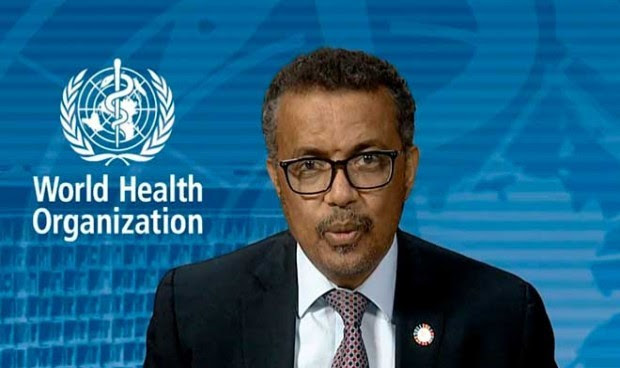
The World Health Organization (WHO) has decided to resume all its clinical trials of hydroxychloroquine despite existing concerns about the drug. The organization's Director-General, Tedros Adhanom, announced today that an independent safety committee has reviewed data from the WHO's Solidarity clinical trial, which is testing various treatments for COVID-19, including hydroxychloroquine. This part of the trial had been paused after a study published days earlier warned of increased mortality associated with this drug and a similar one, chloroquine. The independent committee reviewed the mortality data associated with the drug and found no reason to discontinue the trial, so the WHO Executive Board has ordered its resumption. More than 3,500 patients from 35 countries are participating in the Solidarity trial, which, in addition to hydroxychloroquine and chloroquine, is testing three other treatments: remdesivir, interferon, and lopinavir/ritonavir, two antiretrovirals used to treat HIV.
The main question is whether the data is accurate. This seems inconceivable given that it's a prestigious publication authored by three cardiologists from respected institutions, but for now, there's no way to know because the authors haven't made the data public for independent peer review. They haven't even provided a complete list of the nearly 700 hospitals that participated by electronically submitting anonymous patient data to the American company Surgisphere. Its CEO, Sapan Desai, is an author of the study, along with cardiologists Mandeep Mehra of Brigham and Women's Hospital in Boston, Frank Ruschitzka of University Hospital Zurich, and Amit Patel of the Department of Bioengineering at the University of Utah. The company argues that it cannot release the data or identify the hospitals it works with due to confidentiality agreements.
Numerous experts, including a group of over 200 physicians and biostatisticians from various countries, denounce the study as containing seemingly impossible and unverifiable data. They maintain that the study failed to adequately account for differences between patients, such as who received treatment and why, or the quality of the hospitals where they were admitted. They also believe it is nearly impossible to have high-quality, computerized data on 4,400 patients in a continent like Africa, representing one in four of those infected on the continent. The majority of patients analyzed, some 63,000, are from North America, likely many from the United States, a country where the approved dosage of the drugs is lower than that used in the study, they warn.
Another large study, authored by several members of the same team and based on Surgisphere data, has just been called into question. The study analyzed data from 8,000 patients in 170 hospitals to produce a seemingly conclusive result. Contrary to what other studies suggested, there was no evidence that two blood pressure medications increase the risk of dying from COVID-19. “We have recently been alerted to significant concerns about the quality of the information in that database,” the prestigious New England Journal of Medicine, which published the study, warned this week in a letter from its editors.
Surgisphere has announced it will provide all data to the authors of the study who are not affiliated with the company so they can conduct an independent audit. The two affected journals indicate they will take further action once the results of that analysis are available. More than 200 experts in the field are demanding that the audit be conducted by the WHO or a similar organization. They are also calling on The Lancet to publish all comments from the independent experts who reviewed the study before its publication.
“These studies contain massive amounts of data with detailed medical histories that are never shared and cite a volume of cases that sometimes doesn't correspond to what would be expected for the dates they indicate,” warns Antoni Trilla, an epidemiologist at the Hospital Clínic of Barcelona and a scientific advisor to the government. “It's almost impossible that such data came from major Spanish hospitals. The authors must respond quickly and clearly to the questions raised. If they don't, it's a major scandal. The Lancet will have to provide explanations and also assume responsibility,” he asserts.
Pere Domingo, the medical coordinator of a chloroquine trial at Sant Pau Hospital in Barcelona, questions the study's findings. “Our study only recruited about 70 patients, but even so, if the percentage of adverse effects they detected in that study were accurate, we should have seen them in about eight patients, and that was far from the case,” he explains. “The problem with these studies is that they combine data from very different patients. A COVID-19 patient hospitalized in Russia is not the same as one hospitalized in Spain, and the effects of any treatment given to them cannot be compared,” he emphasizes.
It may never be possible to determine whether these two drugs work against COVID-19 or at what dosage. In Spain and many other countries where the epidemic has been brought under control, there are hardly any new infections left to include in the trials. The misgivings surrounding these two drugs may discourage the few remaining infected individuals from participating in the trials, as Pedro Alonso, director of the WHO's Malaria Programme, explained to El País.
There is a third dubious study that has had an equal or greater impact. It is a preliminary study that has not been peer-reviewed or published in a scientific journal, but it has already influenced important policy decisions. The study claims that an antiparasitic drug—ivermectin—reduces mortality in COVID-19 patients. Despite all the doubts, this treatment has been approved in Peru, where a black market has sprung up for ivermectin intended for animals and sold as if it were for humans. In Bolivia, 350,000 doses have been distributed to patients, according to reports by Carlos Chaccour and Alberto García-Basteiro, physicians at the Barcelona Institute for Global Health, and consultant Joe Brew.
“Beyond the methodological inconsistencies and discrepancies found in these three articles, we are surprised that the apparently largest and most sophisticated database of hospitalized patients is completely unknown and that the data cleaning and analysis processes for such a platform are carried out in such a short time,” explains García-Basteiro. “Until all these doubts are resolved, we believe the results are neither reliable nor credible.”