
From: https://news.un.org/es/story/2020
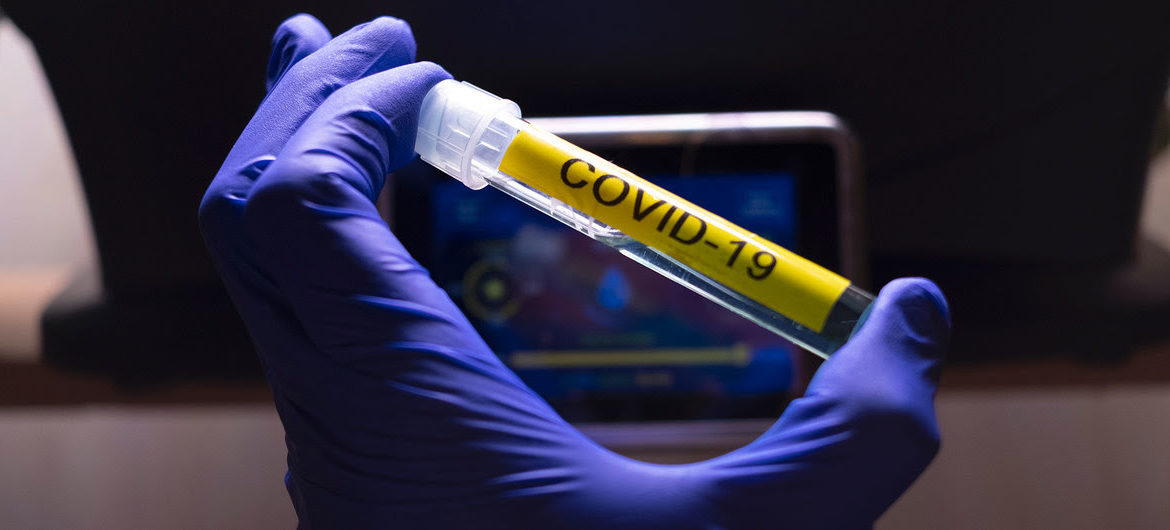
Research is underway to find a vaccine and effective treatments against the coronavirus.
Cases have surpassed 300,000 worldwide, and while staying home and physical distancing help slow the spread, they are only defensive strategies. It is time to attack the virus with aggressive and targeted tactics, such as identifying and isolating every suspected case and implementing full quarantines when necessary.
There are more than 300,000 cases of COVID-19 coronavirus across almost every country in the world, a fact that the director of the World Health Organization considers "heartbreaking".
“The pandemic is accelerating. It took 67 days from the first reported case to reach the first 100,000, 11 days to reach 200,000, and only four to reach 300,000,” Tedros Adhanom Ghebreyesus said at a press conference in Geneva.
According to Dr. Tedros, the trajectory of the pandemic can still be changed, but we must attack the virus and not just defend against it.
To win, we need to attack the virus with aggressive and targeted tactics: testing every suspected case, isolating and caring for every confirmed case, and tracing and quarantining every close contact.
“Asking people to stay home and other physical distancing measures are an important way to slow the spread of the virus and buy time, but they are defensive measures. To win, we need to attack the virus with aggressive and targeted tactics: testing every suspected case, isolating and caring for every confirmed case, and tracing and quarantining every close contact,” he said.
The WHO director acknowledged that some countries are struggling with their capacity to carry out such offensive measures.
“Several countries have shown that mobilizing resources internally from less affected regions is a way to increase capacity. We are also grateful that several countries have sent emergency medical teams to care for patients and train health workers in other nations that need support. This is an incredible example of international solidarity,” he added.
Healthcare workers cannot be left unprotected.
The World Health Organization has been working with countries for years to build a network of emergency medical teams for an eventuality like the coronavirus, to provide a surge capacity of high-quality health professionals who can be deployed to care for patients and save lives.
“But healthcare workers can only do their jobs effectively when they can do them safely. We continue to hear alarming reports from around the world about large numbers of infections among healthcare workers,” he said.
He added that even if everything else is done correctly, if the protection of health workers is not prioritized, many people will die because the doctor who could have saved their lives will be sick.
“As you know, the WHO has been working hard with many partners to streamline and prioritize the use of personal protective equipment. Addressing the global shortage of these life-saving tools means addressing every part of the supply chain, from raw materials to finished product,” he said.
Measures implemented to slow the spread of the virus may have unintended consequences by exacerbating shortages of essential protective equipment and the materials needed to manufacture it.
Protective equipment against the coronavirus is in short supply in many parts of the world
The strength of rich countries is needed
According to Tedros, solving this problem requires political commitment and coordination at a global level.
“This week, I will address the heads of state and government of the G20 countries. Among other things, I will ask them to work together to increase production, avoid export bans, and ensure equitable distribution, as needed,” he said.
The head of the World Health Organization called for unity within the G20, which accounts for more than 80% of the world's Gross Domestic Product.
“Political commitment means strong solidarity that can help us move forward and fight this pandemic in the strongest way possible.”
Tedros asserted that these leaders must act with solidarity and unity, as if they were one, because they have the greatest stake in the world, in all aspects.
Face masks are only recommended for people who have contracted coronavirus
Using unproven medications can generate false hopes
The head of the World Health Organization reminded everyone that there is still no treatment that has proven effective against the COVID-19 coronavirus.
“It’s great to see the level of energy now being directed toward COVID-19 research,” he said, but clarified that small, observational, non-randomized studies will not provide the answers that are needed.
“The use of unproven medicines without the right evidence could create false hopes and even do more harm than good and cause a shortage of essential medicines that are needed to treat other diseases,” Tedros warned.
The WHO has launched the Solidarity Trial to generate robust, high-quality evidence as quickly as possible.
The director said he was pleased to see that many countries have joined the initiative: “The more countries that sign up to the Solidarity Trial and other large studies, the faster we will get results on which drugs work and the more lives we can save,” he said.
The subway in New York, usually packed with people, is almost empty because of the coronavirus.
Is loss of smell a symptom?
During the press conference, Dr. Maria Vankerhkove clarified to reporters that the World Health Organization is investigating reports that coronavirus patients are losing their sense of taste and smell as one of the first symptoms of the disease.
“This is something we need to investigate thoroughly if we want to categorize it as one of the first symptoms of COVID-19. We have several countries that are conducting local studies, collecting information from patients and their contacts, and they are looking at these things,” the epidemiologist stated.
He added that the WHO has published protocols for conducting these studies and that dozens of nations are already implementing them.
“We have contacted them to find out if the loss of taste and smell is part of the list of symptoms, but we have not yet received an answer,” he said.
The doctor noted that the main symptoms scientifically confirmed so far are fever, dry cough, and shortness of breath. Other confirmed symptoms include general malaise, headache, and in some cases, gastrointestinal issues.