
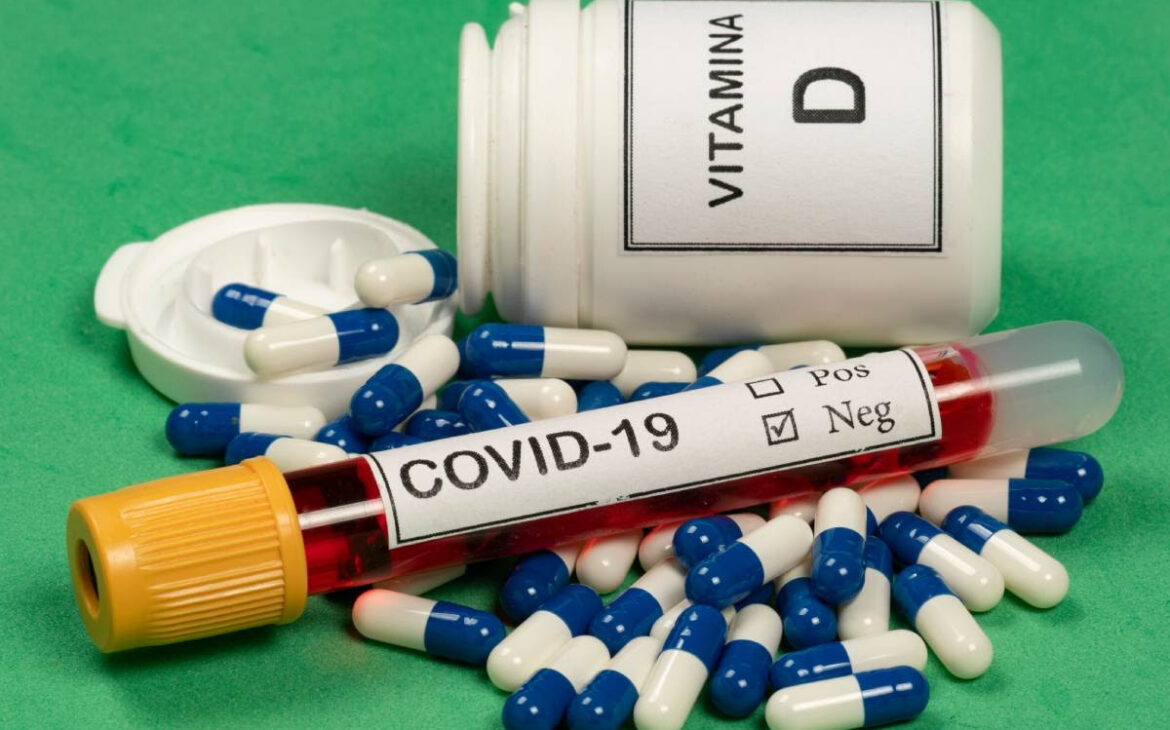
High oral doses of cholecalciferol or vitamin D3 (10,000 IU for 14 days) to patients with COVID-19 pneumonia and a deficiency of this element could reduce the inflammation that causes the disease and restore the immune system.
By Raquel Serrano
This is not the first time, since the start of the SARS-CoV-2 pandemic, that the potential usefulness of vitamin D for the prevention and/or recovery of the most severely ill COVID-19 patients has been highlighted. Numerous studies have demonstrated the link between low vitamin D levels and a higher rate of COVID-19 positivity, compared to patients with sufficient vitamin D levels.
Furthermore, there is growing evidence linking low vitamin D levels to the clinical severity of pneumonia caused by this viral disease. “The available scientific evidence suggests that vitamin D may, in some way, positively influence the inflammatory damage caused by COVID-19, thanks to its role in the immune system,” Miguel Cervero Jiménez, from the Internal Medicine Department of the Severo Ochoa University Hospital in Leganés, Madrid , and promoter of the phase III COVID-19 HUSO study, told DM. The study involves the teams of José Sanz Moreno, from the Príncipe de Asturias Hospital in Alcalá de Henares ; Daniel López Wolf, from the Alcorcón Foundation ; Pablo Ryan Murua, from the Infanta Leonor Hospital ; and Mayte Coiras, from the National Center for Microbiology at the Carlos III Health Institute , all in Madrid.
This study aims to confirm whether the oral administration of high doses of vitamin D3 (cholecalciferol), in conjunction with standard treatment, could act as a pharmacological barrier against the inflammatory damage caused by COVID-19 and, to some extent, modulate the immune system in patients with COVID-19 pneumonia. This form of the vitamin has the most published scientific evidence, as most global clinical trials for COVID-19 use vitamin D3 (cholecalciferol).
Its objective is to provide estimates of the increase in Vitamin D levels in adult patients with low vitamin D levels, who require hospitalization or are already hospitalized, diagnosed with COVID-19 pneumonia.
The study also considers the evolution of the disease, admission to the ICU and the mortality rate, in addition to a detailed study of different immunological parameters that will be carried out in the Immunopathology Unit of the National Center for Microbiology.
QUESTION: What patient profiles are being analyzed, and what are the initial findings regarding metabolic or immunological variations?
ANSWER . Currently, 57 participants have been included—all with vitamin D deficiency as a requirement for study entry—27 of whom were recruited at Severo Ochoa Hospital. Their median age is 62 years, and 81.46% are male. At the time of recruitment, 50% of the patients presented with respiratory failure, with an oxygen saturation of 92%, and bilateral pneumonia in 83.96% of cases. They presented with vitamin D deficiency (17 ng/ml) and a significant elevation of immunometabolic parameters indicative of inflammation, such as LDH, CRP, D-dimer, and ferritin. In this context, our hypothesis is that vitamin D would restore the immune system by increasing anti-inflammatory cytokines such as interleukin-10 (IL-10), as well as the number of regulatory T lymphocytes that can control the potency of the immune response.
Q. Why was cholecalciferol (vitamin D3) chosen over other forms of vitamin D?
A. For the treatment of vitamin D deficiency in Spain, we have preparations of vitamin D3 (cholecalciferol), 25(OH)D3 (calcifediol), 1,25(OH)2D3 (calcitriol), and 1α(OH)D3 (alphacalcidiol). 1,25(OH)2D3 and 1α(OH)D3 have a short half-life and, as active metabolites, their use carries a higher risk of hypercalcemia; therefore, they are not recommended for the routine treatment of vitamin D deficiency. It is important to note that vitamin D3 and 25(OH)D3 are not equipotent. 25(OH)D3 is more hydrophilic, has a shorter half-life, a faster onset of action, and is 3 to 6 times more potent at raising serum 25(OH)D3 concentrations.
According to the International Osteoporosis Foundation (IOF), hydroxylated forms, although marketed in some countries, should not be used as a substitute for adequate intake of vitamin D3 (cholecalciferol). Considering the differences between the two products (cholecalciferol and calcifediol), the safety profile of vitamin D3 (cholecalciferol) offers the advantage of allowing empirical treatment, at least for at-risk populations, thus reducing the number of tests required. This is due to several factors related to this vitamin: it results in more stable, predictable, and sustained plasma levels; and, unlike calcifediol, it has a specific feedback mechanism in its hepatic hydroxylation, which prevents excessive vitamin D activity and allows treatment to be administered weekly or monthly. The intake of 4,000 IU/day of vitamin D3 (cholecalciferol) in the general population on a chronic basis is safe, as there is no evidence of hypercalcemia, hypercalciuria, or any other adverse effects, according to the European Food Safety Authority, which is responsible for establishing maximum limits for chronic nutrient intake. Only patients with severe liver dysfunction or chronic kidney failure require the use of active vitamin D metabolites.
Q. What results are expected from phase III of the trial?
R. We are trying to demonstrate that the inflammatory condition caused by COVID-19 requires high doses of vitamin D for a short period of time to normalize plasma levels and thus help restore the immune response to baseline levels.
Q. Under normal conditions, what levels of vitamin D are adequate for the body? Does the Spanish population suffer from a deficiency of this element?
R. National scientific societies, such as the Spanish Society for Bone and Mineral Metabolism Research (SEIOMM), and international societies, such as the International Osteoporosis Foundation (IOF), the American Association of Clinical Endocrinology (AACE), the Endocrine Society (ES20), and the National Osteoporosis Foundation (NOF21), have agreed that optimal cholecalciferol requirements are those that maintain serum levels around 30 ng/ml. The reason for establishing this cutoff point is that above this level, maximum intestinal calcium absorption is achieved, resulting in lower levels of parathyroid hormone (PTH), which minimizes the risk of secondary hyperparathyroidism and, therefore, bone resorption.
Vitamin D deficiency has become a global public health problem, affecting more than half the population.
Vitamin D deficiency has become a public health problem worldwide, affecting more than half the population. In Spain, vitamin D insufficiency/deficiency has been reported in all age groups and in both sexes.
Q. The study refers to the administration of high doses. What would these be compared to what are considered normal doses?
A. The dose considered high for the study is 10,000 IU. In the treatment of vitamin D deficiency, 25,000 IU of vitamin D3 (cholecalciferol) can be used initially per week for the first few months to restore vitamin D levels, followed by maintenance with 25,000 IU of cholecalciferol monthly or bi-weekly. The IOF and the ES recommend that at-risk populations and those with osteoporosis maintain an intake of 1,500–2,000 IU of cholecalciferol/day (equivalent to 25,000 IU of cholecalciferol every two weeks).
Q. If the activity is confirmed, would it represent an adjuvant treatment in patients with COVID-19 pneumonia? What would be the most appropriate time for administration?
A. If the usefulness of administering 10,000 IU of vitamin D to patients with COVID-19 pneumonia is confirmed, the strategy would be to determine, first, if there is a deficiency and, if so, administer and maintain treatment with these doses for 14 days.
Q. An association has also been found between vitamin D deficiency and a higher positivity rate for SARS-CoV-2 infection. In this case, is this suggested as a preventive measure in children or the elderly, for example?
A. The study does not attempt to explore this aspect. According to the SEIOMM (Spanish Society for the Study of Metabolic and Oral Reproductive Medicine), the vitamin D requirements in various life stages are: children and adolescents: 400-600 IU/day; postmenopausal women: 600-800 IU/day; elderly women: 800-1000 IU/day; patients with osteoporosis: 800-1000 IU/day; patients with fractures: 800-1000 IU/day. Based on the high prevalence of severe vitamin D deficiency in patients with osteoporotic hip fractures, it is advisable to determine vitamin D levels and, when this is not possible, to use higher doses. In patients receiving corticosteroids: 800-1000 IU/day.
Universal vitamin D screening is not indicated for the general population; it is of interest in at-risk groups.
Universal vitamin D screening is not indicated for the general population; it should only be performed on those considered at risk. However, based on the growing body of knowledge regarding this deficiency, it will be necessary to include other at-risk groups or patients being studied for other diseases for which high-quality experience is still lacking, such as patients infected with SARS-CoV-2.