
Here's the latest on transmissibility, virulence, vaccine efficacy, and more
With reports about the more transmissible Delta variant, and now "Delta plus," taking the media by surprise, here are the essential facts when it comes to the latest variant in the spotlight.
What is the Delta variant?
The Delta variant, or B.1.617.2, first emerged in India, with the first samples dating back to October 2020. However, it did not raise alarms until India faced a major surge in COVID-19 this spring, when it became a variant of concern, according to the CDC and the World Health Organization (WHO).
B.1.617.2 is a variant of the first "India" variant, B.1.617 (called Kappa and only a variant of interest). There is also B.1.617.3 (a variant of interest) and, more recently, B.1.617.2.1, which has been called "Delta plus" in the media and is not yet listed by the CDC or WHO.
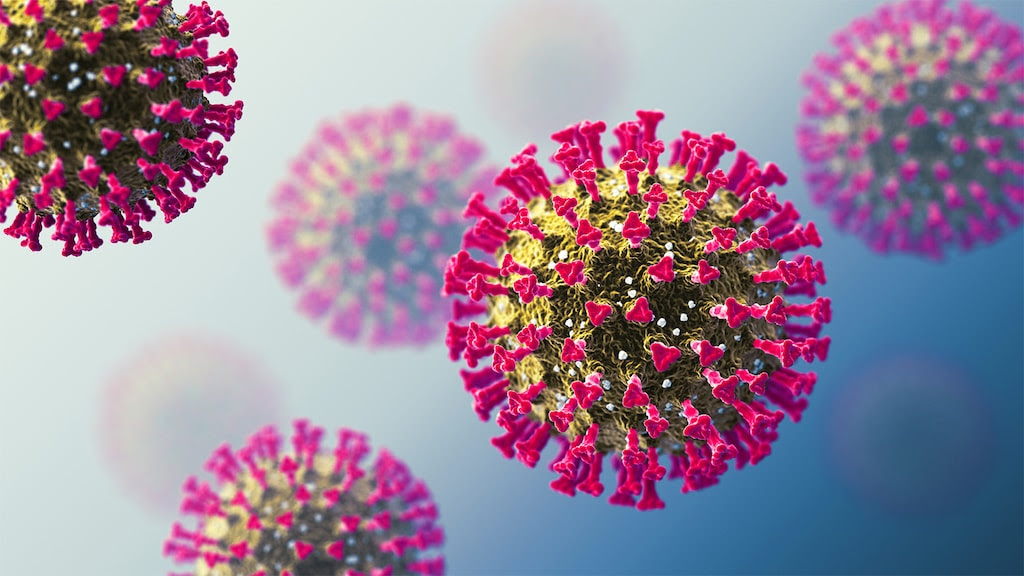
The main mutation of concern in Delta is L452R, which alters the spike protein. “Delta plus” appears to have acquired the K417N mutation, which also alters the spike protein. Both variants also have several other spike mutations, as well as other genetic changes that appear to have a minor impact.
Is Delta more transmissible?
De hecho, Delta parece ser más transmisible. El CDC cita un estudio de Public Health England de 3.765 casos (grupos de hogares), emparejados con 7.530 controles (caso único en un hogar), para estimar las probabilidades de transmisión de Delta en el hogar en comparación con la variante Alpha (B.1.1.7). que surgió por primera vez en el Reino Unido. Este estudio encontró que Delta era un 64% más transmisible que Alpha en lo que respecta a la transmisión doméstica (IC del 95%: 1,26-2,13, P <0,001).
It was already estimated that Alpha was 50% more transmissible than the wild-type virus.
Is Delta more virulent?
It's unclear whether Delta causes more severe illness or leads to more deaths. Evolutionary biologists and virologists told The Atlantic that there are many reasons why the epidemiology of virulence can be noisy, for example, if a surge is overwhelming a hospital.
Even so, preliminary epidemiological work from England and Scotland suggests that Delta may be more virulent. A Public Health England analysis of approximately 43,000 COVID-19 cases found a higher risk of hospitalization with Delta compared to Alpha (HR 2.26, 95% CI: 1.32–3.89, P = 0.003).
And a Public Health Scotland study published in The Lancet found that the risk of hospital admission was 85% higher in patients with the Delta variant compared to the Alpha variant (HR 1.85; 95% CI: 1.39-2.47).
Do vaccines protect against delta?
Data from England and Scotland suggest that the vaccines still protect against Delta, although the variant somewhat reduces their effectiveness.
In its latest analysis, Public Health England reported a 10% absolute reduction in the overall effectiveness of the two-dose vaccine against symptomatic disease with Delta compared to Alpha (79% vs. 89%). Regarding hospitalizations, full vaccination offered similar protection against Delta (96%) and Alpha (93%).
A Public Health England study published in late May on the preprint server medRxiv found that the Pfizer injection appeared to be more protective against symptomatic Delta disease than the AstraZeneca injection (87.9% vs 59.8%).
The Lancet study by Public Health Scotland revealed similar results, showing substantial, though somewhat diminished, effectiveness against symptomatic infection with Delta. This study also found better efficacy with the Pfizer vaccine (79%) than with the AstraZeneca vaccine (60%).
In addition, Moderna announced the results of a small laboratory study that showed only a "modest reduction" in antibody neutralization against Delta with its mRNA vaccine.
"There are still infections after vaccination, and even more so with Delta, but current vaccines still provide excellent protection against illness and death compared to no vaccine," Christina Pagel, PhD, of University College London, told MedPage Today .
Do monoclonal antibodies work against it?
The CDC states that there is a "potential reduction in neutralization" by some of the currently authorized monoclonal antibody treatments.
Last week, the US halted distribution of Eli Lilly's monoclonal antibody combination (bamlanivimab/etesevimab) due to poor performance against the Gamma (P.1) and Beta (B.1.351) variants.
Regeneron has maintained that there is no reduction in neutralization against Delta with its monoclonal antibody combination casirivimab/imdevimab. The same is true for GlaxoSmithKline and Vir Biotechnology's sotrovimab.
Are children at greater risk with Delta?
Parents have been particularly concerned about whether the Delta variant poses a greater risk to children. While there is no biological evidence to support this, experts are worried about the vulnerability of children simply because they are not yet vaccinated.
Recently, infections in children accounted for half of Israel's new COVID infections , linked to the reopening of the country's schools in May. Even so, there is still no indication that Delta is more severe in children.
Why is everyone worried?
According to the latest estimates, only about half of the US population is fully vaccinated. This has experts worried that when fall arrives, Delta could be particularly problematic for those who haven't yet received their vaccines.
From: https://www.medpagetoday.com/special-reports/exclusives/93351