
By Stephanie Lavaud
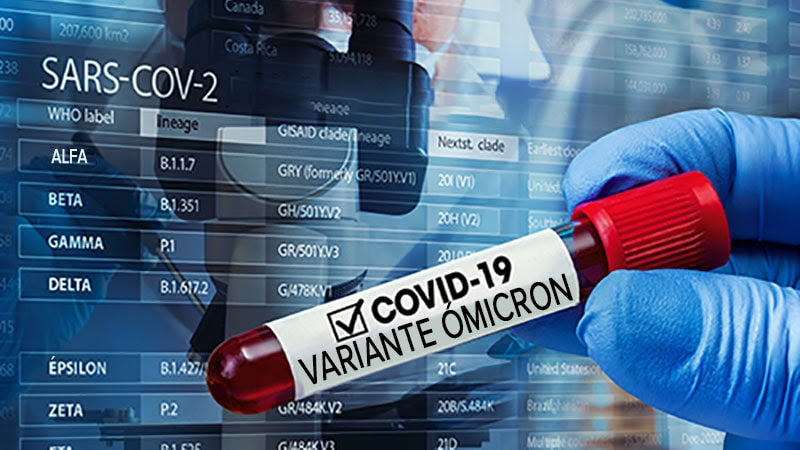
PARIS, FRANCE. First identified in South Africa, a new variant of SARS-CoV-2, designated Omicron B.1.1.529, is causing global concern, to the point that some countries have suspended connecting flights to and from southern Africa. What do we know about this variant, and how is it potentially dangerous?
Where was this variant detected?
On November 22, South Africa's National Institute for Communicable Diseases (NICD) identified a variant of SARS-CoV-2 belonging to lineage B.1.1.529. It was first detected in the Gauteng region, with a relatively high frequency, "with more than 70% of sequenced genomes (N = 71) from samples collected between November 14 and 23, 2021 belonging to this lineage," the NICD said in a press release.
Given the speed of its spread, it is likely already present in other South African provinces. It would also have priority over the delta variant, said Tulio de Oliveira, Ph.D., director of the Centre for Epidemic Response and Innovation (CERI) in South Africa, in a tweet .
Four more cases have been identified in neighboring Botswana, and a traveler from South Africa has been detected in Hong Kong. The first case in Europe has also been detected, specifically in Belgium. According to the Belgian media outlet RTBF , it involves "a young adult woman who developed symptoms 11 days after traveling to Egypt via Turkey. She had no connection to South Africa or any other country in southern Africa. She was not vaccinated and had not been infected in the past." Israel has also reported its first case of the new variant.
Why is this variant potentially concerning?
The distinguishing feature of this new strain is that it has a large number of mutations already observed in SARS-CoV-2 variants identified as variants of interest (VOI) or variants of concern (VOC), as well as new mutations. Among these, some confer resistance to neutralizing antibodies, others increase transmissibility, and still others enhance the virus's infectivity.
"A mutational profile that makes this variant very worrying," according to de Oliveira.
At the moment the symptoms do not appear to differ from those we know with the other strains (beta, delta), on the other hand, the nature of the mutations found in this variant suggests to researchers that it could present, at least partially, an "immune escape".
Can these mutations affect the sensitivity of screening tests?
It is probably a coincidence: "one of these mutations can be detected thanks to standard diagnostic tests, so it does not require sequencing to allow its detection," specifies the NICD press release.
In detail, "the B.1.1.529 strain has a deletion (△ 69-70) within the spike protein S gene which makes its detection relatively easy by conventional polymerase chain reaction tests, while most of the other targets (including the RdRp and N genes) do not appear to be affected, according to the hundreds of samples analyzed in the Gauteng laboratories, so it is unlikely that the sensitivity of the tests will change," the NICD considers.
Polymerase chain reaction (PCR) tests typically detect at least two very different targets in the SARS-CoV-2 genome, which serves as a control when a mutation arises, scientists explain. "Analysis of mutations in the nucleocapsid gene ( N gene) of the B.1.1.529 viruses therefore suggests that rapid antigen tests should not be affected; however, verifications are being carried out."
What does the World Health Organization (WHO) say?
On November 26, the Technical Advisory Group on the Evolution of the SARS-CoV-2 Virus (TAG-VE), an independent group of experts that periodically monitors and evaluates the evolution of the virus and assesses whether specific mutations and combinations of mutations alter its behavior, classified the new variant B.1.1.529 as of concern with the label omicron.
The following is recommended to countries:
- Improve surveillance and sequencing efforts to better understand circulating variants of SARS-CoV-2.
- Submit the complete genomic sequences and associated metadata to a publicly available database, such as GISAID.
- Report initial cases/clusters associated with coronavirus infection to the WHO via the IHR mechanism.
- Conduct field research and laboratory assessments, to the extent possible, to improve understanding of the potential impacts of coronavirus on COVID-19 epidemiology, severity, effectiveness of social and public health measures, diagnostic methods, immune responses, neutralizing antibodies, or other relevant characteristics.
Variants of concern are so named because, in addition to meeting the criteria for a variant of interest (they exhibit genetic changes that are predicted or known to affect the characteristics of the virus and have been identified as causing significant community or multiple cluster transmission in several countries), they exhibit increased transmissibility, a change in epidemiology, increased virulence, a change in the clinical presentation of the disease, or decreased effectiveness of social and public health measures or available diagnostics, vaccines, and therapies.
What are the immediate consequences?
Several countries have decided to suspend flights from southern Africa.
The United Kingdom was the first to react, announcing on Thursday night the inclusion of six African countries on its red list: South Africa, Namibia, Botswana, Zimbabwe, Lesotho and Eswatini, resulting in flight bans from these destinations.
Italy, in turn, has issued an entry ban to its territory for anyone who has visited several southern African countries, including South Africa, in the last 14 days.
Germany will also deny entry to its territory to foreign travelers from the region.
France decided on Friday, November 26, to suspend flights from southern Africa (South Africa, Lesotho, Botswana, Zimbabwe, Mozambique, Namibia, and Eswatini), a measure that will be in effect for a minimum of 48 hours. At the time, no cases of the new variant had been detected in France.
Spain also suspended flights to and from South Africa and Botswana, despite the fact that the Ministry of Health has reported that there are no cases yet.
The measures in Europe follow the declaration by Ursula von der Leyen, President of the European Commission, regarding the suspension of flights from southern Africa and other affected countries. Meanwhile, in the Americas, the United States and Canada are joining the European Union in suspending flights from southern Africa. However, the WHO today advised against implementing travel restrictions.
Why the appearance of variants in South Africa?
On Friday morning, Dr. Benjamin Davido, an infectious disease specialist at Raymond-Poincaré Hospital in Paris, France, told France Info that "variants appear mainly in countries where the virus is most prevalent, such as South Africa. It is the country with the highest number of immunocompromised patients, and in particular, the highest number of HIV patients, for whom access to care is extremely difficult." He added that immunocompromised patients are "incubators of variants."
“Vaccination is not responsible for the emergence of variants; quite the contrary,” he asserted. “We risk finding ourselves in a scenario where we see more and more variants appear. We shouldn’t panic; this is the result of not acting quickly enough, so we must act even faster in terms of vaccination,” Dr. Davido concluded.