
The variant lacks a feature that allows distinguishing probable cases among positive PCR tests
Scientists say they have identified a "stealth" version of Omicron that cannot be distinguished from other variants using the PCR tests deployed by public health officials to get a quick picture of its spread around the world.
The discovery came as the number of cases of the original Omicron variant detected in the UK increased from 101 to 437 in a single day and Scotland announced a return to working from home.
The stealthy variant has many mutations in common with the standard Omicron, but lacks a particular genetic change that would allow laboratory PCR tests to be used as a rough, ready-made means of identifying likely cases.
The variant is still detected as coronavirus by all routine tests and can be identified as the Omicron variant by genomic testing, but probable cases are not flagged by routine PCR tests that provide faster results.
Researchers say it is too early to know if the new form of Omicron will spread in the same way as the standard variant of Omicron, but that the "stealthy" version is genetically distinct and therefore may behave differently.
The stealth variant was first detected among Covid virus genomes submitted in recent days from South Africa, Australia, and Canada, but it may have already spread more widely. Of the seven cases identified so far, none are in the UK.
The discovery came when the prime minister told the cabinet that Omicron appeared to be more transmissible, and officials admitted this would have consequences for its impact and the likelihood that more restrictions would be needed.
At Tuesday's cabinet meeting, which was also attended by the government's chief scientific adviser, Patrick Vallance, and England's chief medical officer, Chris Whitty, Boris Johnson told ministers that "early indications" were that Omicron was more transmissible than the existing dominant variant, Delta, a statement said.
Johnson's spokesman said the next contingency step remains the possible imposition of the so-called Plan B, which would introduce vaccine certification and instructions to work from home whenever possible.
While the government "would like to ensure that parliament has a say" in the new rules, the spokesman said, ministers had existing powers to unilaterally impose restrictions on Plan B, for example, if needed during the Commons' Christmas recess.
Despite these considerations, the spokesperson confirmed that, for now, the official advice remained that people should return to workplaces if possible, while taking into account mitigations such as ventilation and testing. They said: “We are encouraging businesses to bring people back to the office, in line with the guidance.”
Scotland announced it will return to working from home whenever possible until at least mid-January. First Minister Nicola Sturgeon revealed that around 4% of Covid-19 cases in Scotland are likely the Omicron variant, with that figure "steadily rising." This translated to approximately 122 new cases per day with the variant's genetic marker in Scotland, although only 99 cases overall had been confirmed by genomic sequencing.
“Our estimate at this stage is that the doubling time for Omicron cases may be as short as two to three days, and that the R number associated with the new variant may be much higher than 2,” Sturgeon said. Contact tracing was also being improved in Scotland, with close contacts of positive cases being asked to get tested and self-isolate.
The discovery of the new form of Omicron led researchers to split the B.1.1.529 lineage into standard Omicron, known as BA.1, and the newer variant, known as BA.2.
"There are two lineages within Omicron, BA.1 and BA.2, which are quite genetically distinct," said Professor Francois Balloux, director of the Genetics Institute at University College London. "The two lineages can behave differently."
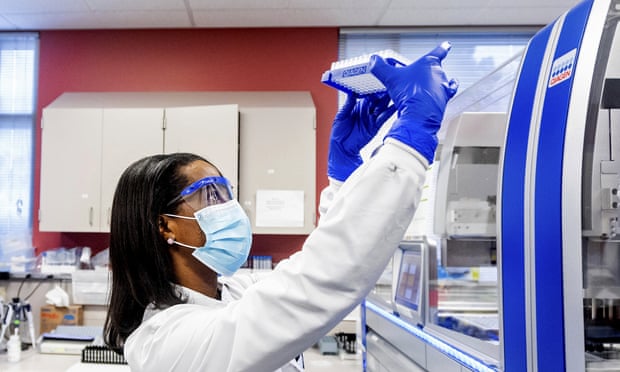
Scientists use whole-genome sequencing to confirm which variant has caused a Covid infection, but PCR tests can sometimes provide an indication. Approximately half of the PCR machines in the UK look for three genes in the virus, but Omicron (and the earlier Alpha variant) test positive for only two of them. This is because Omicron, like Alpha, has a genetic change called a deletion in the “S” or spike gene. This flaw means that PCR tests showing what is called “S gene target failure” are highly suggestive of Omicron infections.
Informally, some researchers are calling the new variant "stealth Omicron" because it lacks the deletion process that allows PCR tests to detect it.
A major unknown is how the new variant emerged. While it belongs to the Omicron family, it is so genetically distinct that it could qualify as a new "variant of concern" if it spreads rapidly. Having two variants, BA.1 and BA.2, emerge in rapid succession with shared mutations is "worrying," according to one researcher, and suggests that public health surveillance is "missing a major piece of the puzzle."