
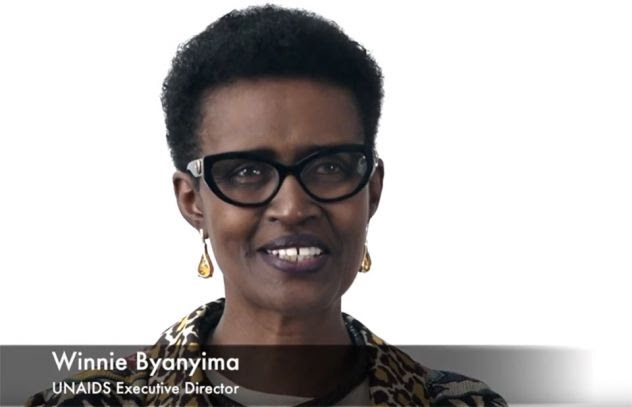
I firmly believe in communities.
Communities are the ones that can make change a reality.
Communities are our greatest hope for eradicating AIDS, because they are the ones who have been fighting against HIV from the beginning.
While the epidemic was wreaking havoc in our countries, in our cities and in our towns, women formed communities and supported each other to bear together the burden of caring for their families.
For a very long time we have taken its voluntariness for granted.
Faced with adversity, communities of gay men, sex workers, and drug users have organized to claim their right to health as citizens under equal conditions.
Therefore, we know that the communities have proven their great worth. There is no room for debate about this.
Without these communities, 24 million people worldwide would not have access to treatment today. Without the women-led communities living with and affected by HIV, we would be nowhere near ending new infections among children, nor would we be able to raise orphans or care for the sick.
Twenty-five years ago, a woman from Burundi named Jeanne was the first person to publicly disclose her HIV-positive status. Today, Jeanne works to hold leaders accountable and to fight for the right to healthcare.
Pioneers like Jeanne have been joined by young leaders like Yana, a 20-year-old Ukrainian woman who was born with HIV. Yana founded Teenergizer, a group that brings together young people from all over Eastern Europe. In a world where older men hold power, her sole aim is to empower young people like herself to raise their voices and make choices.
Let's consider Fiacre. He lives in the Central African Republic and, like thousands of other young people, arrived there displaced by the conflict. Fiacre cycles to a clinic, passing through all the barriers and checkpoints, to collect his antiretroviral medication and that of the members of his group. If it weren't for him, each and every one of those people would have to face this dangerous journey alone. It's simply astonishing.
As you can see, communities make a difference all over the world.
However, we must change our attitude of taking the efforts of communities for granted.
On this World AIDS Day, UNAIDS wishes to commend and pay tribute to the achievements of activists and communities in the fight against HIV. We also wish to remember and honor all those who have been lost along the way. They were the ones who broke the silence and brought life-saving services to communities. However, as invaluable as these countless contributions by women and so many others are, they can never replace the responsibility of governments.
Let us remember that governments have committed to ensuring that at least 30% of HIV services are community-led.
They have also agreed that 6% of all HIV funding will be allocated to community mobilization, the promotion of human rights, and changing harmful laws that only hinder our path to eradicating AIDS.
Let's be clear: today, defending human rights and standing up to discrimination, criminalization, and stigma is a risky job.
Let us therefore call upon governments to open up spaces so that activists can carry out their work in the best way they know how.
With communities leading the way and governments keeping their promises, we will end AIDS.
Winnie Byanyima
Executive Director of UNAIDS
United Nations Assistant Secretary-General
UNAIDS
In: https://www.unaids.org/es/resources/presscentre/pressreleaseandstatementarchive/2019/november/world-aids-day-2019-message-from-executive-director-winnie-byanyima