
Rafael Rangel-Aldao, Editor
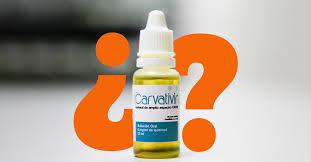
Venezuelans are awaiting details on Carvativir, the new anti-Covid-19 compound announced by the National Government on January 24, 2021. It was described as a " powerful antiviral developed by Venezuelan scientists, which will begin mass production to neutralize 100 percent of the coronavirus ." The official statement specifies, however, that Carvativir passed all efficacy and safety tests over nine months, with no side effects or negative consequences, exhibiting "tremendous" antiviral capacity. Its intellectual property is protected by patents, and it is soon to be submitted to the World Health Organization for evaluation as a treatment for Covid-19.
What is Carvativir?
Regarding the chemical nature of Carvativir, it is believed to be a derivative of thyme ( Thymus vulgaris ) with the chemical name " recombined 2-methyl-5-(1-methylethyl)phenol," better known as Carvacrol or 2-Methyl-5-(1-methylethyl)phenol. This is not new, as both extracts and pure products of thyme have a long tradition as nutraceuticals and therapeutic agents dating back to ancient times. The chemical structure of numerous essential oils, products of the secondary metabolism (terpenes) of thyme, is well known.
How do essential oils, particularly Carvacrol, act against SARS-CoV-2?
A very recent publication, still in press, details certain mechanisms of action of thyme essential oils against various influenza viruses and coronaviruses: Silva and colleagues conducted a molecular docking study to analyze the efficacy of carvacrol, menthol, and eugenol (main components of the essential oils) against several proteins in SARS-CoV-2. These compounds were reported to have higher affinities for the ACE-2, RdRp, Mpro, and spike proteins. Similarly, an in silico study by Kumar et al. evaluated the binding potential of carvacrol to the main protease protein in SARS-CoV-2 [152]. The results showed that carvacrol exhibited significant suppression of viral replication by inhibiting Mpro. Games et al. conducted an in vivo study evaluating the impact of three molecules, including carvacrol, in the elastase-induced emphysema mouse model [157]. Their results indicated that cavacrol inhibited macrophage recruitment, alveolar enlargement, and IL-1β, IL-6, IL-8, and IL-17 expression in the lavage fluid.
What is required to obtain WHO approval for Carvativir as an antiviral drug?
The most eloquent and recent example of an antiviral review by the WHO is remdesivir, a compound famous for having been used, even without official FDA approval, on the outgoing US president as a COVID-19 patient. Incidentally, the patent for remdesivir, held by Gilead Sciences Inc. of Foster City, California, took more than nine months, from October 29, 2015, to August 8, 2017 (20 months), but it is possible that the process in Venezuela will be faster. Regarding the study protocol by the WHO and other international organizations, the journal Science published the following report after remdesivir treatment underwent four randomized, double-blind, placebo-controlled clinical trials with thousands of patients :
At best, one large, well-designed study found that remdesivir modestly reduced recovery time from COVID-19 in hospitalized patients with severe illness. Some smaller studies found no impact of the treatment on the disease. Then, on October 15, in the decidedly unfavorable news for Gilead this month, the fourth and largest controlled study delivered what some believed to be a death blow: the World Health Organization's (WHO) Solidarity trial showed that remdesivir does not reduce mortality, nor the time it takes for COVID-19 patients to recover.
The WHO's Solidarity trial
The WHO's Solidarity trial, conducted in 405 hospitals across 30 countries, is roughly three times larger than the three previous trials combined that yielded modest results for remdesivir, and many scientists hoped it would better resolve remdesivir's value. Solidarity did not use a placebo but instead compared remdesivir and three other repurposed drugs to each other and to the standard of care. Researchers from the Solidarity trial described the study results to FDA representatives on October 10 and published a preprint on medRxiv five days later. Solidarity's primary objective was to determine whether the drugs reduced mortality among hospitalized COVID-19 patients, which none of them did. The researchers also noted that remdesivir did not affect the length of hospital stay or whether COVID-19 patients required ventilators, which are only used when people progress to very severe illness.
How are WHO recommendations made?
The WHO's methodological support aims to develop and disseminate guidelines for COVID-19 pharmacological treatments, based on a dynamic systematic review and network analysis. To this end, an internationally renowned Guideline Development Group (GDG) of content experts, clinicians, patients, and methodology specialists developed the recommendations following standards for developing reliable guidelines using the GRADE approach. No conflicts of interest were identified for any panel member.
What was the WHO's recommendation for Remdesivir?
In moving from the evidence to a conditional recommendation against the use of remdesivir in hospitalized patients with COVID-19, the panel emphasized the evidence suggesting no significant effects on mortality, need for mechanical ventilation, time to clinical improvement, and other important patient outcomes. The panel placed little weight on small and uncertain benefits in the presence of the remaining possibility of significant harm. Furthermore, the panel considered contextual factors such as resources, feasibility, acceptability, and equity for different countries and healthcare systems.
Preliminary findings on Carvativir as a potential antiviral drug against SARS-CoV-2/Covid-19
There is only one valid conclusion based on the information currently available: thyme extracts, including many of the essential oils derived from this plant, have therapeutic potential against coronavirus. However, it is prudent to await further data from Carvativir trials, following the international protocols described above, to qualify as a candidate for an anti-COVID-19 drug. Let's hope this is the case, and that this future news becomes a reality.
Electronic publication of Vol. 2(7): pp. 01-03. 2021 National Academy of Medicine of Venezuela Electronic Legal Deposit: DC2020000636 ISSN-e: 2665-0479