
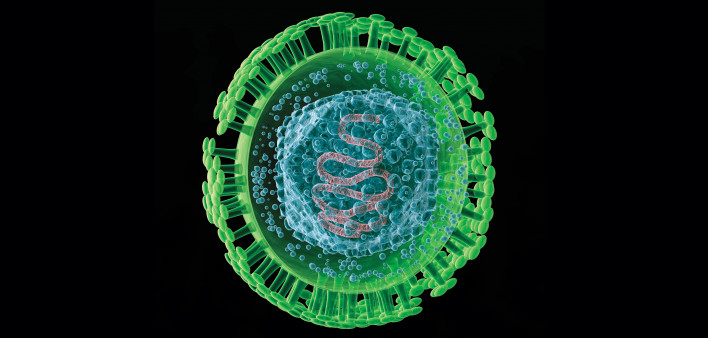
Herpes simplex refers to the conditions caused by two related viruses that result in painful blisters. Herpes is difficult to prevent, treat, and cure, but scientists are working on vaccines and better medications.
Oral herpes (cold sores or fever blisters), which affects the lips and mouth, is usually caused by the herpes simplex virus-1 (HSV-1), while genital herpes, which affects the genital or anal region, is usually caused by the herpes simplex virus-2 (HSV-2). However, both viruses can appear in either area.
About two-thirds of Americans have HSV-1, and approximately 15% of adults have HSV-2. People who are HIV-positive are more likely to carry HSV and are prone to more frequent and severe outbreaks. Furthermore, having HSV makes it easier to acquire and transmit HIV.
HSV-1 and HSV-2 belong to a larger family of human herpesviruses that also includes the Epstein-Barr virus and the varicella-zoster virus, which causes chickenpox and shingles. Like other herpesviruses, they cause lifelong infection. HSV-1 and HSV-2 establish a latent infection in nerve cells and are not cleared by the immune system.
HSV-1 is primarily transmitted through contact with cold sores or saliva. HSV-2, classified as a sexually transmitted infection (STI), is usually spread through contact with sores on the genitals or in the anal area. However, the virus can be transmitted from the mouth to the genitals or vice versa during oral sex. HSV spreads most easily when a person has active sores, but some people shed the virus before outbreaks.
People with herpes often experience shame or stigma and worry about transmitting the virus. Talk to your sexual partners about genital herpes and other STIs, and avoid sex during active outbreaks. Condoms and dental dams offer partial protection. Interestingly, some studies suggest that HIV pre-exposure prophylaxis (PrEP) also reduces the risk of contracting HSV.
HSV-1 and HSV-2 are dormant most of the time, but they can reactivate periodically and cause recurring outbreaks. Herpes usually begins with small red bumps that fill with fluid and break open to form painful blisters. This may be accompanied by flu-like symptoms and swollen lymph nodes. In a small number of cases, herpes simplex can affect organs such as the eyes, lungs, liver, and brain.
Herpes sores usually heal in about two weeks, and the virus remains dormant but does not disappear. Many factors can trigger recurrent outbreaks, such as other illnesses, sun exposure, and emotional stress. Some people experience a tingling or burning sensation known as a prodrome shortly before an outbreak.
Antiviral medications can reduce the severity and duration of symptoms, help prevent viral reactivation, and decrease the risk of HSV transmission, but they do not eliminate the virus.
Three similar nucleoside analogues—acyclovir (Zovirax), valacyclovir (Valtrex), and famciclovir (Famvir)—are approved to treat oral and genital herpes. These antivirals are well-tolerated and have few side effects. Treatment works best if started within 24 hours of the first symptoms or prodromal signs appearing. HSV does not always respond to commonly used antivirals, and some people, especially those who are immunocompromised, develop acyclovir-resistant virus.
Researchers are working on new therapies that could be more effective. Pritelivir, an antiviral targeting the HSV helicase-primase enzymes, is in phase III trials. Other treatments, such as monoclonal antibodies and gene therapy, are being studied. Currently, there are no vaccines to prevent or treat HSV-1 or HSV-2 infection, but this is also an active area of research.
A growing herpes advocacy movement is following in the footsteps of HIV activists to secure more funding and research. Ask your doctor if a clinical trial might be a good option for you.