
JULY 12, 2019
Laws discriminate in many ways, but the criminalization of people is one of the most devastating forms of discrimination. Despite calls for reform and commitments under the 2030 Agenda for Sustainable Development to eliminate discriminatory laws and reduce inequalities:
• Sixty-nine countries still criminalize same-sex sexual relations.
• More than 100 countries criminalize drug use or personal possession of drugs, and 98 countries criminalize some form of sex work.
• One in five people in prison are there for drug-related offenses, and 80% of them are there for possession or personal use.
• Nineteen countries deport non-nationals because of their HIV status.
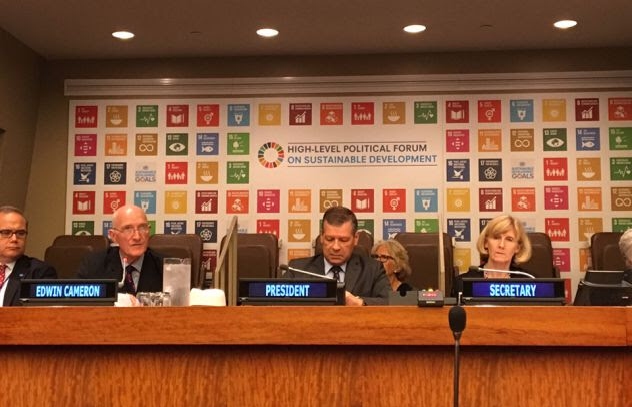
A high-level political forum will convene in New York, USA, from July 9 to 18 to review progress made against Member States' commitments to achieve the Sustainable Development Goals, including those related to inequality and peace, justice, and strong institutions.
“As a judge, I have seen the effect that criminal law can have on communities. It removes people from protection systems, declares their actions or identity illegitimate, increases stigma, and excludes them from any protection that our judicial, social, and economic systems can provide,” said Edwin Cameron, a judge at the Constitutional Court of South Africa.
Criminalization affects access to health services, housing, education, social protection, and employment. The criminalization of same-sex relationships, sex work, or drug use prevents people from accessing healthcare services, including HIV prevention, testing, and treatment. Data shows that gay men and other men who have sex with men are 28 times more likely to contract HIV than the general population, people who inject drugs are 22 times more likely, and sex workers and transgender women are 13 times more likely.
“To fully implement the Sustainable Development Goals agenda and ensure that no one is left behind, we must ensure that laws protect people from discrimination and do not force people to hide from society,” said Lloyd Russell Moyle, a UK Member of Parliament.
Groups representing criminalized individuals are often prohibited from registering as non-governmental organizations, and, for example, sex workers are often unable to unionize. Propaganda laws can mean that information about, for example, HIV prevention cannot be disseminated.
“Ending AIDS and achieving the health-related Sustainable Development Goals will not be possible without addressing discrimination, violence, and exclusion. We have an opportunity to build on the lessons of the AIDS movement and place the rights and meaningful participation of the most marginalized at the heart of the response,” said Luisa Cabal, Director of Human Rights and Gender at UNAIDS.
Criminalized groups often experience higher rates of violence than the general population. Victims of violence who are also criminalized are often unable to report crimes to the police, and lawyers risk violence and other repercussions if they take on their cases.
“Discrimination and criminalization of people living with HIV continues to this day. And in Indonesia, we are facing persistent stigma and criminalization of key populations. We will never end AIDS if we do not make their needs and rights a top priority for access to healthcare, protection from violence, and the realization of the right to health,” said Baby Rivona of the Indonesian Positive Women’s Network.
Countries that decriminalize drug use and make harm reduction services available have seen reductions in new HIV infections. Evidence shows that decriminalizing sex work could prevent between 33% and 46% of new HIV infections among sex workers and clients over the age of 10. However, reductions in new HIV infections are not the only outcome; other results include improvements in well-being and trust in law enforcement, reductions in violence, and greater access to healthcare and support services. Most importantly, however, decriminalizing sex workers means they are no longer viewed as criminals and stigmatized by society.
From: https://www.unaids.org/en/resources/presscentre/featurestories/2019/july/20190712_charting-progress-against-discrimination