
In New York, where the first cases of AIDS were reported in 1981, fewer than 2,500 new cases were reported in 2018, the lowest number in many years.

ALBANY – There was a time when an HIV diagnosis was a death sentence, when thousands of New Yorkers, mostly gay men, succumbed to AIDS-related illnesses, and the end of the epidemic seemed both medically and mentally impossible.
On Wednesday, however, Governor Andrew M. Cuomo declared that New York is on track to meet its goal of ending the AIDS epidemic in the state by 2020.
After decades of fearful infection rates , the state in 2018 had only 2,481 new diagnoses, down 11 percent from the previous year and 28 percent less than in 2014, when the state began its initiative.
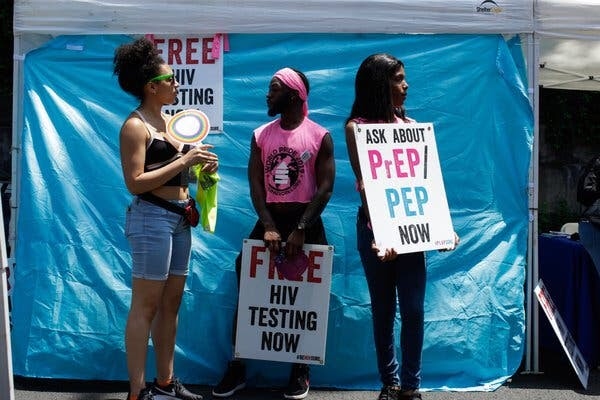
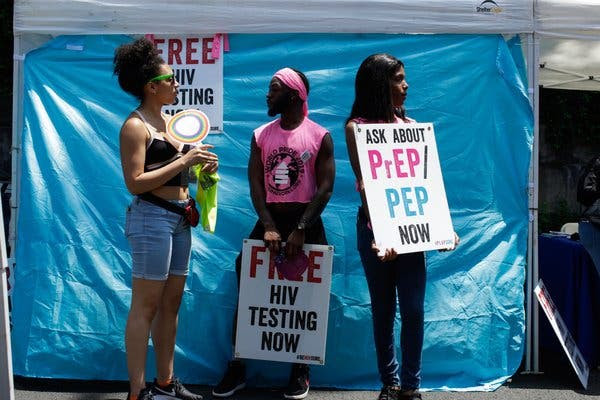
The governor's three-pronged plan to combat AIDS focuses on identifying, tracing, and treating people with HIV infection, including the use of pre-exposure prophylaxis , or PrEP.
The governor said that some 32,000 New Yorkers were now using PrEP, a 32 percent increase since 2017.
"This new data shows we are on track to achieve that goal and continue our historic progress to finally bend the curve on an epidemic that has taken too many lives for too long," Cuomo said in a statement.

Experts in the field say that the progress made in New York, particularly in New York City, which was long an epicenter of infection, is the result of a number of factors, including the use of PrEP and the availability of antiretroviral drugs, which suppress HIV levels.
"Those two things together have been a revolution," said Jen Kates, director of global health and HIV policy at the Kaiser Family Foundation in Washington.
In particular, Ms. Kates said that the state and city had adopted rapid initiation of antiretroviral therapy, sometimes on the same day as a positive test result.
The new data from New York, where AIDS cases have been reported since 1981, are striking compared to the disease's early, horrific days , when many healthy young gay men and others were infected and died. State health officials say they believe they are on track to reduce the number of new HIV diagnoses to just over 1,500 per year by 2020.
They also seek to obtain the estimated number of people infected each year, a term known as incidence, below the number of annual deaths, a measure that officials say would signal the end of the epidemic.
While New York and cities like San Francisco have made great strides in the fight against AIDS, national health officials have been hit by a leveling off in HIV prevention efforts , including in some rural areas and southern states.
A February report from the Centers for Disease Control and Prevention showed that infection rates between 2010 and 2016 had remained stable among gay and bisexual men, who account for more than two-thirds of new infections, with a marked increase among Latino men.
New York City officials say the progress there has been remarkable: In 2000, AIDS-related illnesses were the third leading cause of premature death. By 2017, the disease had fallen to tenth on that list.
Dr. Oxiris Barbot, commissioner of the city's Department of Health and Mental Hygiene, said the continued decline in HIV infections was the result of a coordinated "data-driven, sex-positive approach."
"It's been part of our effort to reduce stigma," said Dr. Barbot, adding, "Not only are we seeing fewer and fewer New Yorkers newly diagnosed with HIV, but they are living long and prosperous lives."
From: https://www.nytimes.com/2019/10/02/nyregion/aids-hiv-epidemic-ny.html