
By: Julio Castro
Venezuela is among the countries in the Americas with a low risk of coronavirus transmission. However, Venezuelan authorities must prepare for the possibility of the infection reaching the country. The National Hospital Survey indicates that the healthcare infrastructure lacks the resources to handle suspected cases.
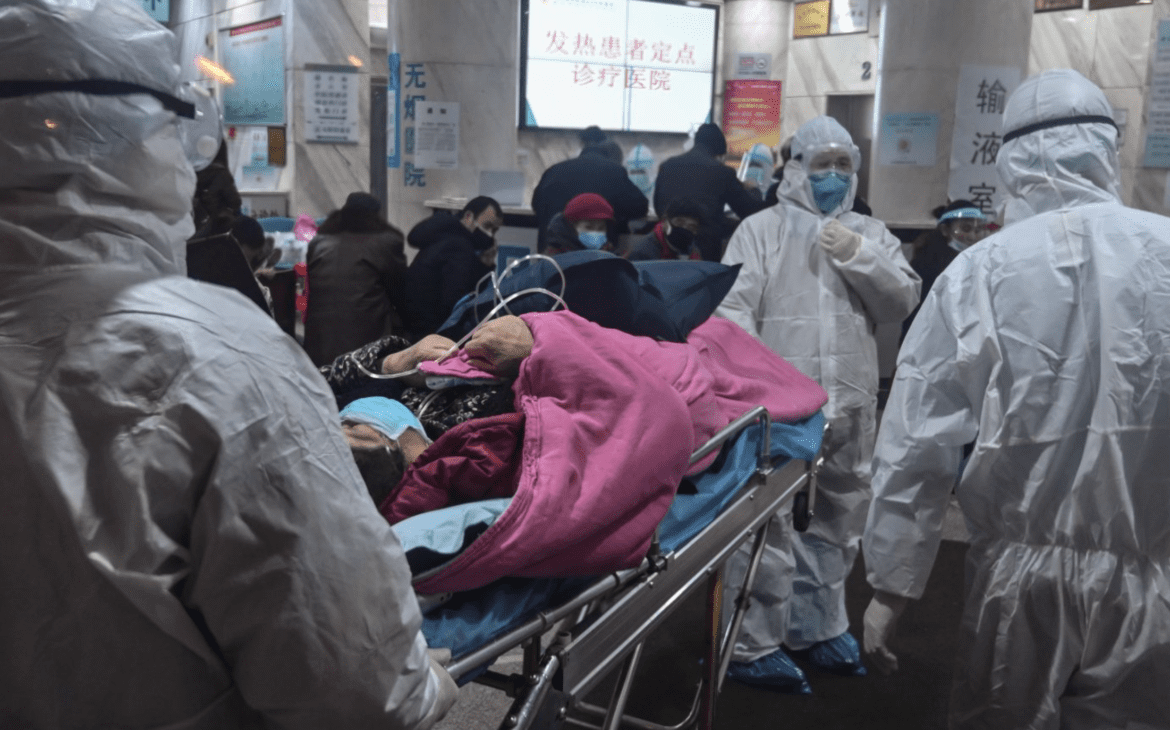
On Tuesday, December 31, 2019, the Wuhan Municipal Health Commission in China's Hubei Province reported 27 patients with pneumonia caused by an unknown virus. A week later, on Tuesday, January 7, 2020, Chinese authorities confirmed they had identified a novel coronavirus, a family of viruses that causes illnesses ranging from the common cold to severe acute respiratory syndrome (SARS). By Thursday, January 30, 9,692 cases had been confirmed in mainland China; 1,527 of them were severe. There were also 12,000 suspected cases.
The World Health Organization declared a public health emergency of international concern, a measure that has been taken five times previously. The new virus was provisionally named 2019-nCoV.
The first death of an infected patient was reported on Saturday, January 11, 2020. Two days later, the WHO reported the first case of an infected person outside of China, in Thailand. Subsequently, cases of coronavirus appeared on four continents, including the Americas.
In this phase of the epidemic, the measures taken, both internationally and nationally, are crucial. Therefore, the Venezuelan government and academic institutions must adequately prepare for potential scenarios using the available information. Preparation, information, and containment in situations like this are the only strategies that can minimize the impact of transmission.
When we see the Chinese government close an entire province, quarantining nearly 45 million people, we are facing a situation that has never been seen before in the history of humanity, in terms of quarantine measures.
Epidemics have several phases. In the first, there is transmission from a common source to a human. This phase appears to have already passed. Available information suggests human-to-human transmission from an animal source (possibly bats), and measures such as market closures and a ban on the sale of live animals have been implemented. The second phase is when people who were exposed at the common site come into contact with others who, in turn, begin to show symptoms. This phase appears to be the current one. There is almost no doubt about human-to-human transmission. What remains to be clarified is how it occurs, in what quantity, through how many routes, and how frequently. Beyond these technical aspects, the evidence of human-to-human transmission exponentially increases the difficulties in controlling the epidemic.
There is still no clear idea of the final magnitude and its impact on humanity. What is clear, however, is that only the measures taken in the coming days/hours in each country will have far-reaching implications.
It appears that containment or social distancing measures can impact the total number of cases in the long term. However, they may not be able to prevent new cases in the coming weeks. In general, barrier measures are most effective when there is person-to-person transmission of an infectious agent: wearing a face mask or physically isolating the patient.
In this early phase of the epidemic, the closure of high-volume transportation systems such as subways, highways, airports, and ports may have some impact on the dynamics of the virus's spread. In a way, we are witnessing a live experiment (a quarantine of 55 million people). Determining whether social distancing measures are effective in mitigating the overall impact of the epidemic is a major question. The biggest uncertainty lies in whether these measures were implemented early enough. It is clear that for years they have been ineffective when applied late or when disease transmission occurs during asymptomatic periods, when identifying cases is nearly impossible. In the current situation, the gap between appropriate and late implementation can be just a few days.

Photo by Nicolas Asfouri | AFP
How likely is it to have a case of coronavirus in Venezuela?
The biological determinants of transmission in a possible case are due to three fundamental causes:
- Number of cases in other contexts. Every time the number of cases increases in China and other countries, the probability of them occurring in Venezuela increases.
- The R0 transmissibility index (the relative or average capacity of an infected patient to transmit the virus to others) currently places this factor between 1.8 and 3.2, based on mathematical models. This is higher than the 2018 seasonal influenza (R0: 1.5 to 2) and lower than measles (8 to 12). In the current context of this illness, which can cause severe lung disease, an R0 between 2 and 3 is high enough to generate tens of thousands of cases and likely thousands of deaths.
- Migration mobility. The number of people moving from the primarily affected area to the unaffected area (the average number of passengers between two or more points) is an important variable. Of course, if mobility is drastically affected (border, port, and airport closures), the probability of transmission drops considerably. The most important question is how long these quarantine or social distancing measures can be maintained without a massive social impact. Paradoxically, the capacity for effective social control in strong regimes can mean a better capacity to prevent spread, and perhaps as a contrasting example, it would be useful to try to imagine a quarantine of this kind in New York, Pennsylvania, New Jersey, Vermont, Rhode Island, Maine, New Hampshire, Connecticut, and Massachusetts (with a total of 55 million people).
To calculate the risk of a coronavirus case in the current circumstances in Venezuela, we use a model that incorporates several factors:
a) Traveler data for 2018 from the International Air Transport Association (IATA).
b) An Epirisk web repository, which is a computational platform designed to quickly estimate the probability of moving infected individuals from disease outbreak sites to other areas of the world via air and everyday means of transport. It also allows the user to explore the effects of potential restrictions applied to airline traffic and transport flows.
If cases double every 48 hours, it can be estimated that by Saturday, February 1, 2020, there will be 18,000 cases in China. Assuming no travel restrictions are implemented, relative and comparative risks between different countries can be estimated. So far, this projection has held true remarkably well.
The countries with the highest probability are those that have already received cases (United States, France, Thailand). These calculations give us an idea of the magnitude of the risk. For example, for every theoretical case in Venezuela, 481 cases would arrive in the United States, 1.6 in Colombia, 2.3 in Peru, and 2.2 in Panama. Venezuela is in the low-risk group due to the number of people traveling to the country from destinations where cases have been reported.
The countries with a high probability of risk in the Americas would be: the United States, Canada, Brazil, and Mexico. Those with an intermediate risk would be: Argentina, Chile, Peru, and Panama. The remaining countries would be at low risk.
In practical terms, and to understand the expected frequency so far, one could assume that Venezuela would have one case when the United States has 481. Estimating the case doubling rate every 48 hours, the second week of February would reach the probability of a case in Venezuela if we assume that the infection rate remains constant in China, there are no travel restrictions in the United States, and there are no control measures in place to efficiently identify suspected cases. Of course, if flight restrictions to or from the affected areas are implemented, the probabilities change substantially. Based on preliminary data on the magnitude of cases, Venezuela is in the low-risk group within the Americas, compared to other countries in the region.
Prediction behavior
So far, these probability-based predictions have come true almost exactly. We need to see if the other high-risk countries report cases soon.

Photo by Tiziana Fabi | AFP
What is the probability of a suspected case in Venezuela?
It is not possible to detect "at a glance" who is infected with coronavirus (almost no disease can be assessed this way). Several factors complicate the development of a strategy or algorithm to effectively identify infected individuals. We are currently at the end of influenza season in the Northern Hemisphere, and since the symptoms are indistinguishable from those of coronavirus, detection systems must be ready to locate suspected cases. This requires either that travelers themselves report their symptoms, or that there is some methodology (scanners, for example) that allows for the identification of potentially infected individuals.
At that time, although it may sound like a cliché, a person of Asian descent, or anyone else who has been in a country with coronavirus cases in the last 15 days and has flu-like or respiratory symptoms, is a concern for national and international surveillance systems. Based on the logic outlined, a person with these basic characteristics is defined as a “suspected” case. They must be identified, isolated, and given specific tests to determine whether or not they have coronavirus.
To answer the question of what is the probability of a suspected case being registered in Venezuela, several criteria are used:
- The number of flights or airlines arriving in Venezuela from countries with coronavirus cases, according to IATA data.
- Average number of passengers per week by aircraft type for each airline.
- The average rate of influenza symptoms used by the U.S. Centers for Disease Control and Prevention (CDC) in 2018, integrated into a linear model with varying probabilities. According to this estimate, between one and two people arrive in Venezuela each week from countries with coronavirus cases who have influenza-like respiratory symptoms. It is important to emphasize that this is not the calculated probability of having coronavirus. It is the probability of having a person with respiratory symptoms consistent with coronavirus who comes from an area with cases. The estimate indicates to surveillance systems how prepared they should be.
- It is estimated that for every symptomatic case, there may be three to four asymptomatic individuals upon arrival who may develop symptoms in the following days. The direct implication of these calculations is clear: people with respiratory symptoms arriving on flights with possible connections to affected areas must be evaluated. This involves a basic symptom questionnaire, identification of these cases for clinical and/or virological testing, and monitoring passengers seated near them for the appearance of symptoms in the following days. If a patient tests positive, which usually takes a couple of days, a strategy must be in place for those who traveled to the country and develop respiratory symptoms after arrival to report it to the detection system.
A key element regarding the relationship between pathogenesis (disease evolution) and detection strategies is whether these systems are capable of detecting asymptomatic cases (e.g., without fever).
In the case of influenza, transmission can occur before clinical symptoms appear. For this reason, automated temperature screening systems at airports have historically been ineffective. With SARS, another coronavirus that emerged in China in 2002, the situation is different because transmission only occurs when symptoms are present.
To date, there is no definitive information about 2019-nCoV. Preliminary information suggests that transmission may occur before symptoms appear. The incubation period measured so far is between 10 and 14 days. The conclusions are clear: the likelihood of encountering someone with respiratory symptoms who has traveled from areas with confirmed cases is significant. Therefore, detection systems must be functioning efficiently, transparently, and appropriately.
Are Venezuelan hospitals prepared to handle a suspected case?
Preparing for this type of contingency goes beyond clinical and epidemiological aspects. Regardless of the initial probability of having a case, we must ask ourselves fundamental questions: How robust is our epidemiological detection system? Are there reagents available to analyze samples? Are there sufficient supplies in hospitals and airports to detect, isolate, and diagnose a case?
On Friday, January 24, 2020, in a special broadcast of the National Hospital Survey, conducted with staff from 40 hospitals in the 23 states of Venezuela, we asked:
1) Are there masks (face coverings) in the emergency room for patients and healthcare personnel?
53% of hospitals lack face masks, which are a standard precaution for both suspected patients and healthcare workers. For healthcare personnel handling respiratory care, the recommendation is to use higher-level protective masks (N95 for respiratory therapists, intubation teams, and respiratory sample collectors). It is important to anticipate a potential surge in demand should any cases arise. There is a shortage of high-efficiency masks in the affected area of China.
2) Are there management protocols for patients with possible coronavirus?
92% of hospitals do not have an action protocol, that is, a written rule that defines how to act when a case is suspected.
3) Are there ways to isolate a suspected case?
None of the hospitals surveyed have a designated area for isolating suspected cases. The basic standard for hospital risk management is that patients meeting the criteria for suspected cases should have their contact and route (physical examination, diagnostic studies, and observation) in areas separate from other hospital patients to prevent contagion within the hospital environment.
Available information from previous SARS epidemics reveals that super-spreaders can emerge in the hospital setting. Although a patient can infect an average of 1.5 to 3.1 people (transmissibility rate R0), in SARS it was found that some doctors or nurses infected 8 to 12 people. These are the super-spreaders.
Little information is available from the official sector, which has been common in recent epidemics. With basic considerations, this information should be readily available in hospitals.
While the epidemiological system, in terms of human and technical resources, has historically operated with great dedication and commitment, recent data falls far short of ideal. Since October 2015, there has been no weekly epidemiological bulletin, which is the ideal way to disseminate information on both epidemic and endemic situations. Critical information on malaria, tuberculosis, HIV, dengue, measles, and diphtheria remains undisclosed. The 2019 yellow fever case and the 2018 vaccine-associated polio case were reported to international authorities with significant delays and were never reported locally. Information regarding Zika and chikungunya cases was disseminated to the community belatedly, and data was never shared with the public in a routine, frequent, or appropriate manner. Some official spokespeople even attributed these diseases to politically motivated destabilization attempts.
Given the circumstances known so far about this novel coronavirus with its widespread impact, it seems to be only a matter of time before we see at least “suspected” cases. A significant number of cases with widespread disease seems distant in our region, but the case doubling rate of every 48 hours, both in China and in the most affected countries, is a wake-up call for those countries and systems where cases have not yet been detected.
The most effective tool for managing processes like these is having accurate information that allows society to understand what is happening, its magnitude and risks, and, likewise, to collaborate with government strategies. This is the time for effective action, not just pronouncements and statements. Spokespeople have the undeniable responsibility to give information its due weight, generate the necessary trust in institutions and their processes, and guide the community through its anxieties and concerns. Only in this way will the potential impact of a situation like this be minimized.