
That was a demand from specialists around the world who have maintained for months that it is the most important route of contagion
The transmission of the coronavirus through aerosols , small droplets that we emit simply by breathing and that can remain floating in the air, was clearly incorporated by the World Health Organization (WHO) , a demand from specialists around the world who have maintained for months that it is the main route of contagion.
The update, which was made on April 30 and is currently only available on the English page, noted that “we know that the disease is caused by the SARS-CoV-2 virus, which spreads between people in different ways.”
Among these ways, the WHO described: “The virus can spread from the mouth or nose of an infected person in small liquid particles when they cough, sneeze, talk, sing or breathe . These particles range from larger respiratory droplets to smaller aerosols.”
"Current evidence suggests that the virus spreads mainly between people who are in close contact with each other, generally within 1 meter (short range). A person can become infected when aerosols or droplets containing the virus are inhaled or come into direct contact with the eyes, nose, or mouth," he said.
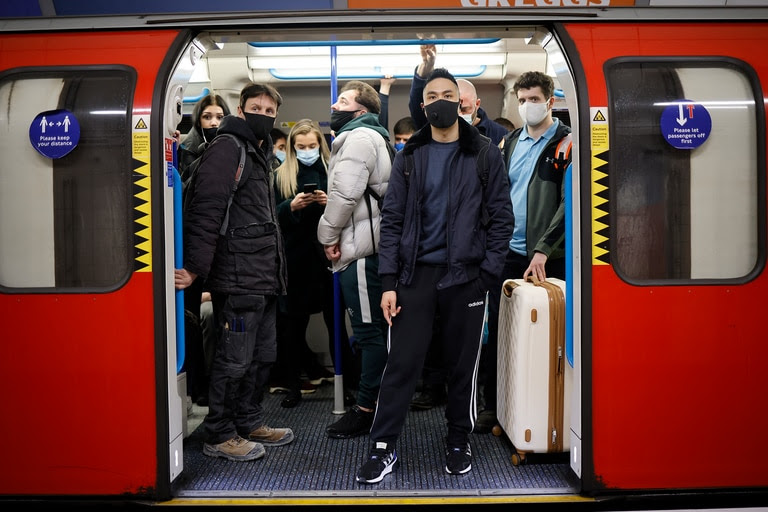
And it added: “The virus can also spread in poorly ventilated and/or crowded indoor environments , where people tend to spend longer periods of time. This is because aerosols remain suspended in the air or travel more than 1 meter (long range).” Finally, the document reminded that “people can also become infected by touching surfaces that have been contaminated by the virus and then touching their eyes, nose, or mouth without washing their hands.”
Role of aerosols
"This is the first time the WHO has clearly stated , in a publicly accessible document , the role of aerosols in transmission , so that there is no longer any room for confusion," Spanish researcher José Luis Jiménez, one of the world's leading experts on the subject, told Télam.
Until now, and in fact it is still like this in the Spanish version, the WHO had only recognized the possibility of transmission by "aerosols" but did not make clear the importance that these had in proximity and continued to say that the contagion was because the droplets fell on "eye, nose or mouth" .
Furthermore, it narrowed aerosol transmission to "specific environments, especially indoors, crowded and poorly ventilated spaces" where infected people "spend a lot of time with others, for example restaurants, choir practices, gym classes, nightclubs, offices and/or places of worship."
“On March 28 of last year, the WHO stated directly that the virus was not airborne and that saying otherwise was misinformation. This reached the entire world, and they never acted with the same firmness to retract it ; it would appear in some document, they would say that ventilation was important but they didn't explain why,” noted Jiménez, a professor at the University of Colorado, United States.
Although it seems like a subtle difference, the fact that the WHO clearly accepts that the coronavirus is transmitted this way has consequences for the ways of prevention and care to reduce the risk of contagion.
“An example of the impact of getting the message across clearly: in February I was talking to a Secretary of Education from a Latin American country about the start of classes, who was informing me about the protocol for in-person learning, and the precautions were focused on cleaning surfaces and had nothing to do with ventilation or measuring carbon dioxide ,” Jiménez described.
He added: “And this was a problem that affected the entire world ; millions were spent on disinfectants, and ventilation and distancing were downplayed —and we need to explain why.” In July 2020, Jiménez was among the 239 scientists who sent a letter to the WHO urging it to recognize the crucial role aerosols play in the pandemic.
“ Now, with this update, there’s no more doubt. So, if a school or workplace isn’t ventilating, there’s a clear tool to demand it,” he concluded. Jiménez reminded everyone that “saying the coronavirus is airborne isn’t some far-fetched definition; it doesn’t mean the virus is going to travel miles and come back to infect people.”
"It means," he continued, "that infected people release something like invisible smoke that can contain the virus capable of infecting others . This smoke consists of respiratory aerosols; they are very small, invisible particles that remain floating in the air and that another person can inhale in two situations: when you are very close (especially when both are not wearing masks) or when you share the air in a closed room , because the enclosed space traps the air that person is exhaling."