
- Laura Isabel Arellano Garcia Researcher, University of the Basque Country / Euskal Herriko Unibertsitatea
- Iñaki Milton Laskibar, Professor at the University of the Basque Country. Researcher in the Nutrition and Obesity group of the Biomedical Research Networking Center for Physiopathology of Obesity and Nutrition (CiberObn) and the Bioaraba Health Research Institute, University of the Basque Country / Euskal Herriko Unibertsitatea
- María Puy Portillo, Professor of Nutrition. Biomedical Research Center Network for Physiopathology of Obesity and Nutrition (CIBERobn), University of the Basque Country / Euskal Herriko Unibertsitatea
Life expectancy has steadily increased in recent decades, rising from 62.8 and 58.1 years in 1950 in Europe and America, respectively, to 77 and 74.2 years today . While this is good news, this increase has also led to a rise in the prevalence of chronic diseases associated with aging, such as cancer, cardiovascular diseases, and neurodegenerative diseases .
Is there a solution? While aging is a natural and inevitable process, the pathologies associated with it can be prevented. In this regard, the most commonly used strategies are dietary interventions and the promotion of regular physical exercise . Interestingly, these strategies have a common denominator: they influence the composition and function of the gut microbiota.
The microbiota enjoys being with us
We refer to the microbiota when we talk about the collection of microorganisms (bacteria, archaea, bacteriophages, viruses, and fungi) that coexist on the external and internal surfaces of the human body, such as the skin, mucous membranes, and gastrointestinal tract. Specifically, the gut microbiota is involved in various physiological functions (immune response, digestion and absorption of nutrients, and production of bioactive metabolites), so disturbances in its composition can influence the host's metabolic balance—what is known in medical terms as homeostasis.
Although there appear to be common features in the composition of the gut microbiota of key individuals for maintaining vital functions , differences have also been detected between the microbiota of young and older people. These changes lead to a loss of gut microbiota functionality due to reduced microbial richness and diversity, as well as an increase in the number of bacteria associated with unhealthy aging .
For example, it has been observed that the phylum Firmicutes and the genus Bifidobacteria decrease with age, while the phyla Bacteroidetes and Proteobacteria , and the family Enterobacteriaceae increase . This disrupts the symbiotic relationship between the bacteria of the microbiota and the host.
How does age affect the microbiota?
The intestinal barrier plays a key role in protecting against pathogens. As we age, the junctions between the enterocytes that form this protective barrier weaken, losing their functionality. This, along with age-related changes that disrupt the gut microbiota, leads to increased intestinal permeability and the overgrowth of pathogenic bacteria . Consequently, bacteria or bacterial components gain greater access to the bloodstream .
In this scenario, both the production and release of pro-inflammatory cytokines into the bloodstream increase dramatically. In this regard, one study found that transferring gut microbiota from elderly mice to young mice led to an increase in intestinal inflammation, a process known as inflammaging (inflammation associated with aging).
To make matters worse, the production of microbial metabolites derived from food processing changes with age. Specifically, the production of short-chain fatty acids (SCFAs), which have a proven anti-inflammatory effect , decreases with age .
More oily fish, rosemary and parsley
It has been described that consuming certain strains of probiotic bacteria from the genera Lactobacillus and Bifidobacterium not only helps improve the composition of the gut microbiota but also promotes the production of anti-inflammatory short-chain fatty acids (SCFAs ). Furthermore, consuming prebiotics provides the gut microbiota bacteria with a substrate in which to grow.
In this regard, the essential oils of aromatic plants characteristic of the Mediterranean diet, such as parsley and rosemary, show prebiotic effects on the gut microbiota . Likewise, the consumption of galacto-oligosaccharides (GOS), abundant in legumes, and fructo-oligosaccharides (FOS), present in foods such as onions, leeks, and garlic, is particularly effective in preventing the age-related decline in Bifidobacterium bacteria.
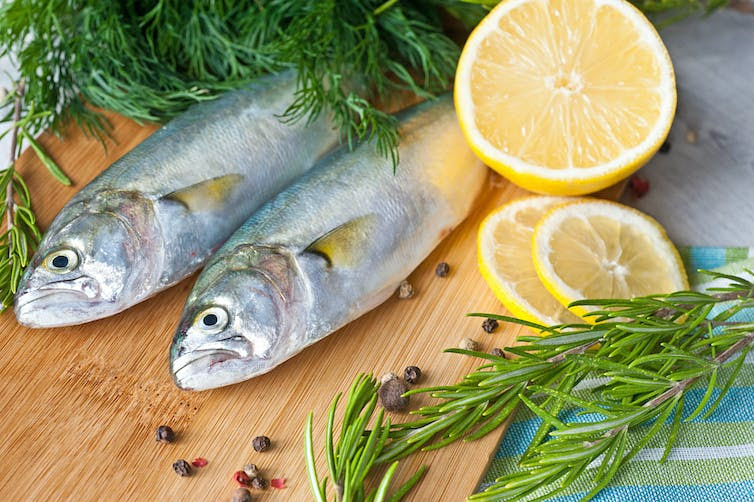
Consuming omega-3 fatty acids, abundant in sardines, salmon, and other oily fish, also increases the richness of the gut microbiota . Likewise, incorporating habits such as a high-fiber diet, maintaining adequate micronutrient intake , and regular physical exercise can contribute to a better gut microbiota composition and healthier aging.