
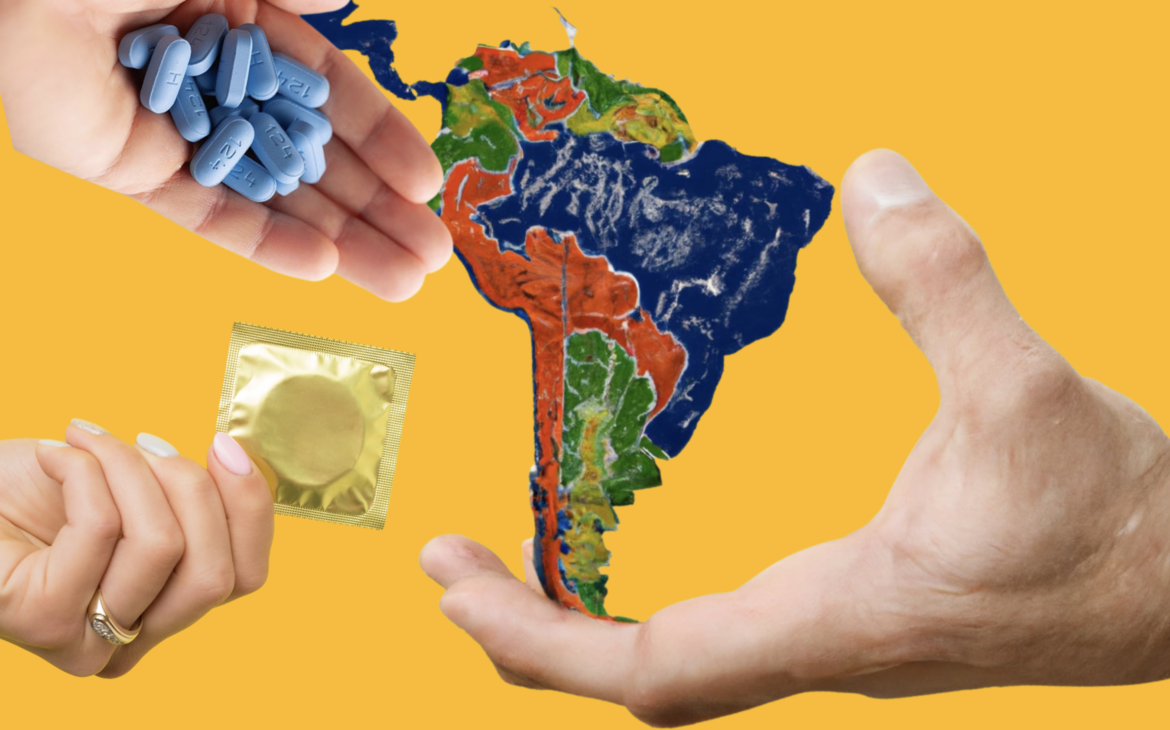
The director of UNAIDS for Latin America and the Caribbean, Luisa Cabal, called on Monday in Panama for greater efforts in HIV/AIDS prevention in the region, where new infections have increased by 5% since 2010.
The director of UNAIDS for Latin America and the Caribbean, Luisa Cabal, called on Monday in Panama for greater efforts in HIV/AIDS prevention in the region, where new infections have increased by 5% since 2010.
"What we know is that HIV is not an epidemic of the past, it is an epidemic that unfortunately has been increasing since 2010 (in Latin America) and we have to strive to do better" what is already known to be needed "in order to reduce new infections," Cabal told EFE.
In 2021, Latin America registered 110,000 new infections, and 2.2 million people were living with HIV. Compared to 2010, this represents an increase of approximately 5%, according to data from the "At Risk" report, published in July 2022 by the Joint United Nations Programme on HIV/AIDS (UNAIDS).
Cabal reiterated that the region is suffering a triple crisis: one of prevention, one of access to treatment, and one of discrimination and exclusion.
Despite this context, he assured EFE that UNAIDS is optimistic that the region will achieve the goal that by 2030 AIDS will no longer be "a public health challenge".
"In Latin America we can do it because our governments do invest in universal access to treatment, but some adjustments need to be made: invest more in prevention and in the populations that need it most (...) we have to do a little more in our region to invest in those populations that need it most and combat the virus of stigma and discrimination," he asserted.
Ninety-seven percent of the HIV response is covered by national governments in Latin America, although there is a risk that this investment will be neglected due to the crisis caused by the COVID-19 pandemic and the war in Ukraine, according to data from the UN agency released last July.
And to invest in the populations that need it most, "it is key to have the best data, of the highest quality, the best information to direct our investments so that they make a difference," he added.
The director of UNAIDS inaugurated a regional meeting in Panama City on Monday to train participants in designing HIV estimates and projections. EFE