
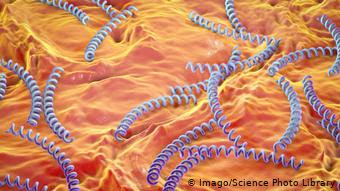
Few people think about syphilis when they have unprotected sex. As the number of infections rises, as well as the number of people contracting both HIV and syphilis, it might be a good idea to think twice and use protection.
Syphilis, chlamydia, gonorrhea, and trichomoniasis are some of the most common sexually transmitted infections (STIs). In 2016, one million people contracted at least one of these diseases every day, according to figures from the World Health Organization (WHO). Even syphilis is making a strong comeback and is far from being eradicated.
Medicine has made remarkable progress in treating HIV in recent years. People who take pre-exposure prophylaxis (PrEP) have 90 percent protection against the virus. This is especially helpful for those at high risk of contracting the disease, such as people who have sex with multiple partners or people who inject drugs.
People living with HIV who strictly adhere to their antiretroviral therapy often have such a low viral load that they are no longer contagious, which has diminished much of the horror it caused a couple of decades ago. As a result, many people today question the purpose of using condoms, leading to an increase in unprotected sex.
The problem is that HIV isn't the only sexually transmitted disease in the world. The risk of contracting other illnesses increases with carelessness, warns Norbert Brockmeyer, director of the German Center for Sexual Health, who this week discussed the sustained increase in various sexually transmitted diseases with other colleagues in Vancouver, Canada.
"The treatment, which on the one hand means relief for those living with HIV, on the other hand has driven up the presence of other STIs. This is similar to what happened in the 1970s with the introduction of the contraceptive pill, which led people to stop using condoms. Back then, we also saw a sharp increase in sexually transmitted diseases, especially syphilis."
Syphilis is far from a disease of the past. Its symptoms are numerous, making early detection difficult, a situation exacerbated by the disease's various stages. If left untreated, the disease can be fatal. And in the case of a co-infection with HIV and syphilis, the risk of serious consequences increases. The good news is that syphilis can be treated with antibiotics. The key, of course, is that it be detected early.
The number of patients infected with both HIV and syphilis has increased sharply in recent years. People carrying the syphilis pathogen—the bacterium Treponema pallidum—are at greater risk of HIV infection, and those with both conditions die more quickly. Men who have sex with men are most affected by this combination.
Infection always causes inflammation, Brockmeyer explains. “This inflammation activates immune cells,” he explains. “These cells accumulate receptors on their surface, to which human immunodeficiency viruses bind,” he elaborates. Individual pathogens, such as syphilis and HIV, can also interact at the cellular level.
Drugs don't play a role in this story. "Different substances play an important role for different people in the sexual experience. Drug use can increase the number of sexual encounters. But the arousal effect of narcotics fades over time, and to repeat it, higher doses are necessary. This creates a spiral effect where increased consumption leads to greater neglect of prevention; it's a never-ending story," the doctor explains.
There are different types of infectious agents. Some appear to cause changes in nerve tissue and the brain. Scientists believe that people infected with HIV may experience more severe neurological complications if they contract syphilis.
Eye infections are also becoming more common, explains Brockmeyer. "People infected with HIV should undergo testing to determine what other pathogens are present in their bodies so they can be treated more effectively," advises the specialist.
Improving therapies is a recurring theme in HIV/AIDS research and also in the treatment of other sexually transmitted infections. “A key question is how we can achieve a complete cure, what the prospect of a vaccine looks like, and how we can eliminate HIV altogether,” says Brockmeyer. These are some of the topics that will be discussed at the International AIDS Conference, which will take place in Mexico from July 21 to 24, 2019.
From: https://www.dw.com/es/s%C3%ADfilis-y-vih-un-peligro-que-ataca-en-pareja/a-49668316