
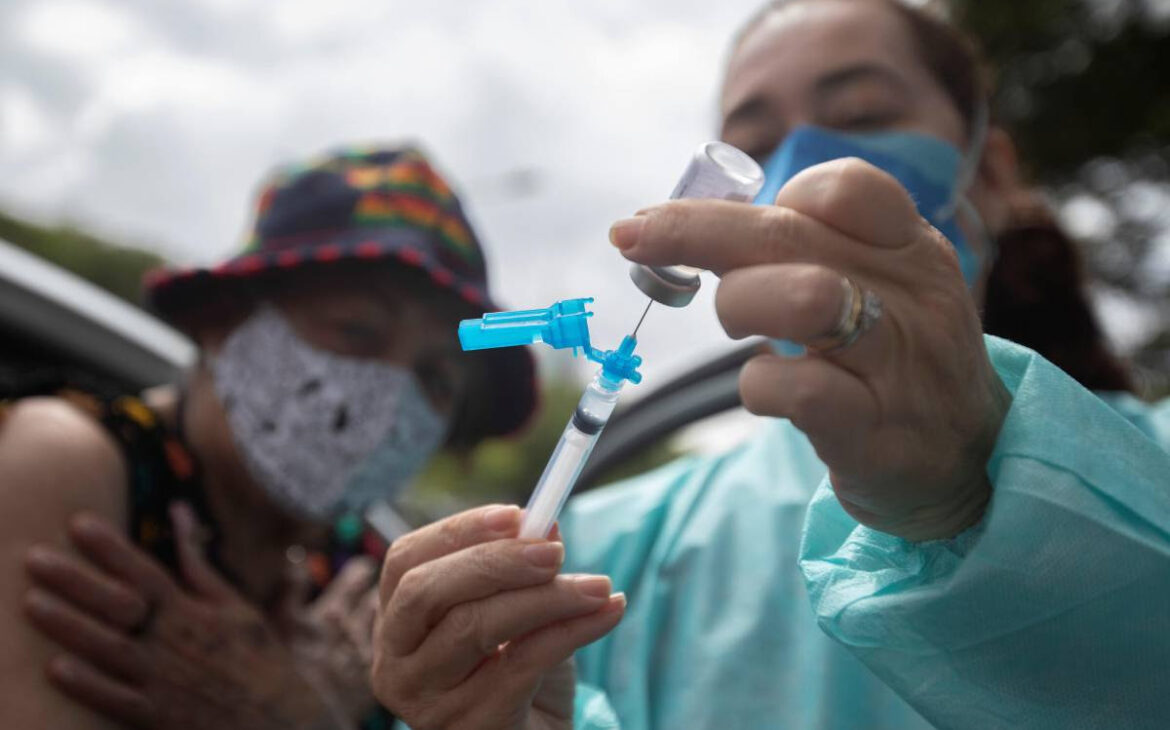
As the P.1 variant becomes better understood, the worst fears about its transmissibility and ability to infect those who have already had an infection are being confirmed.
By Sonia Moreno
A unique combination of mutations makes the P.1 variant of SARS-CoV-2 (the one we all know as the Brazilian variant) a potential dominant virus, by favoring its spread , even among people who have already had the infection by the coronavirus of another lineage.
This is the worrying conclusion of a study conducted by a large team of researchers from Brazil and the United Kingdom, which is still pending peer review, although its results are public.
Among the key findings provided by these scientists, led by Nuno Faria of Imperial College London, is that the Brazilian variant is between 1.4 and 2.2 times more transmissible. Also, using data from Manaus, Brazil, where the P.1 variant predominates, and analyzed through a dynamic model integrating genomic and mortality data, they found that of every 100 individuals who have had SARS-CoV-2 infection, 25 to 61 are susceptible to reinfection with this variant.
“Cases of SARS-CoV-2 infection in Manaus, Brazil, resurfaced in late 2020, despite high levels of previous infection there. Through genome sequencing of viruses sampled in Manaus between November 2020 and January 2021, we identified the emergence and circulation of a new and concerning variant of SARS-CoV-2, the P.1 lineage, which acquired 17 mutations, including a trio in the 'Spike' protein (K417T, E484K, and N501Y) that are associated with increased binding to the human ACE2 receptor,” the authors describe.
According to this study, co-led by Ester Sabino, a professor at the Institute of Tropical Medicine at the University of São Paulo, the P.1 lineage emerged in early November 2020 in Manaus. Specifically, the study indicates that the first detected infection was reported on December 6, and within two months this lineage had become predominant in the region.
Will the vaccines work?
Extrapolating the reinfection capacity of the mutation, and therefore its ability to evade 'natural' immunity, to mean that vaccine protection against this variant will be lower is premature and, the authors emphasize, urgently needs to be studied. However, they remind us that neutralizing antibody titers are "only one component of the elicited response to vaccines, and that a minimal reduction in neutralization titers compared to previous circulating strains is not uncommon."
However, the possibility exists – and can become a reality as has already been seen in some research with vaccines in the South African variant – and studies such as a Swiss one that has just been made public , also still pending peer review, which indicates that the Brazilian variant, in addition to being more infectious – again, due to its greater affinity with the human cell receptor ACE2 – is less susceptible to neutralization by the antibodies generated by the SARS-CoV-2 from Wuhan.
This has been demonstrated by the research, led by immunologist Martin Bachmann, from the University Hospital of Bern, both in an experimental murine model and in serological samples from Covid patients.
We will also have to wait and see how all this data translates into the effectiveness of vaccines against P.1, especially if the vaccination rate and preventive measures fail to prevent it from spreading worldwide. The authors of the Brazilian-British study state that thanks to genomic surveillance and the constant sharing of data by international teams, they were able to quickly identify and characterize the new P.1 variant, although they admit that in many places that do not yet have adequate surveillance, it may be circulating unchecked.
“Existing genomic surveillance is currently inadequate to determine the true international extent of P.1, and this shortage limits the detection of similar variants of concern globally,” they warn.