
The first three people who received the experimental therapy did not experience serious adverse effects or toxicities.
By Liz Higheyman
EBT-101, a novel CRISPR gene-editing therapy from Excision BioTherapeutics, showed no serious adverse effects in the first three study participants treated, researchers reported at the European Society for Gene and Cell Therapy annual meeting in Brussels. However, the presentation lacked data on the treatment's efficacy.
Antiretroviral therapy can keep HIV replication suppressed indefinitely, but the virus inserts its genetic instructions into the DNA of human cells, creating a long-lasting reservoir that drugs cannot reach. These so-called HIV proviruses remain dormant in resting T cells during treatment, but begin producing new viruses when antiretroviral therapy is stopped, making a cure nearly impossible.
A team led by Kamel Khalili, PhD, of Temple University, has been researching gene therapy to cure HIV for more than a decade. In 2014, they reported that a CRISPR-Cas9 tool could remove a segment of integrated viral DNA necessary for viral replication. A study published in 2019 demonstrated that it could remove integrated HIV genes and eliminate latent viral reservoirs in mice.
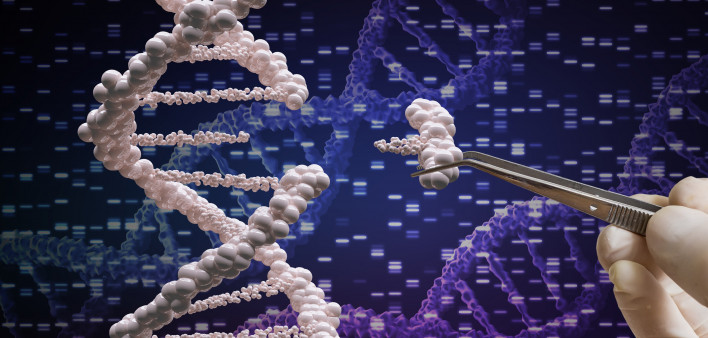
This led to the development of EBT-101, a CRISPR therapy delivered by an adeno-associated virus that uses dual guide RNA to target three sites in the integrated HIV genome. Making cuts at these sites could prevent the production of new, intact viruses. Last August, researchers reported that a single dose of EBT-101 safely and effectively eliminated an HIV-related virus from viral reservoirs in monkeys, although the study did not involve discontinuing antiretroviral treatment.
The first human clinical trial of EBT-101 began last year. It is recruiting people on antiretroviral therapy with a stable, undetectable viral load. In September 2022, Excision announced that the first participant in the phase I/II trial received EBT-101 in July of that year, noting that if the gene therapy appeared safe and well-tolerated, they would undergo a break from antiretroviral therapy to assess whether their HIV recurred.
At the recent presentation in Brussels, Rachel Presti, MD, PhD, of Washington University School of Medicine in St. Louis, reported that all three participants in the first dose cohort received EBT-101. Initial results indicated no serious adverse events or dose-limiting toxicities. There were four mild adverse events considered definitely or possibly treatment-related, all of which resolved. Two individuals experienced transient and reversible elevations in liver enzymes. None of the three dropped out of the study.
EBT-101 was detectable in the blood of all participants four weeks after receiving a single intravenous infusion at the first dose level evaluated. There was no evidence of “horizontal transmission of the gene vector or deletion of EBT-101 in two tissue compartments related to male reproductive function,” according to Excision.
These findings support testing a higher dose of EBT-101 in a second cohort of six people, which will take place this year. Enrollment is underway in San Francisco, St. Louis, and Camden, New Jersey.
“Establishing the safety and biodistribution of EBT-101 is an important first step in the clinical program,” said William Kennedy, MD, senior vice president of clinical development at Excision, in a press release. “These initial observations provide important clinical data that support advancing the EBT-101-001 trial to the next dosing cohort.”
According to the company, study participants will be followed for 48 weeks after administration of EBT-101, and all eligible participants will be assessed for sustained viral suppression after discontinuing antiretrovirals in an analytical treatment interruption starting at week 12. After the initial study, they will be enrolled in a long-term follow-up study (EBT-101-002).
The first participant to receive EBT-101 in the summer of 2022 has already well passed the 12-week period at which treatment discontinuation should have begun, but Excision has not provided further information on their status. The company said in its press release that additional data will be presented in 2024.
Although these initial results appear promising, it is still too early to say that a functional cure for HIV is on the horizon.
“Scientists tell me this will be part of a cure someday. And I shrugged and said, ‘Here we go again,’” Matt Sharp, a long-term HIV survivor and advocate, told the San Jose Mercury News. “Now we just have to do the research. We have to be hopeful, because the epidemic isn’t over.”